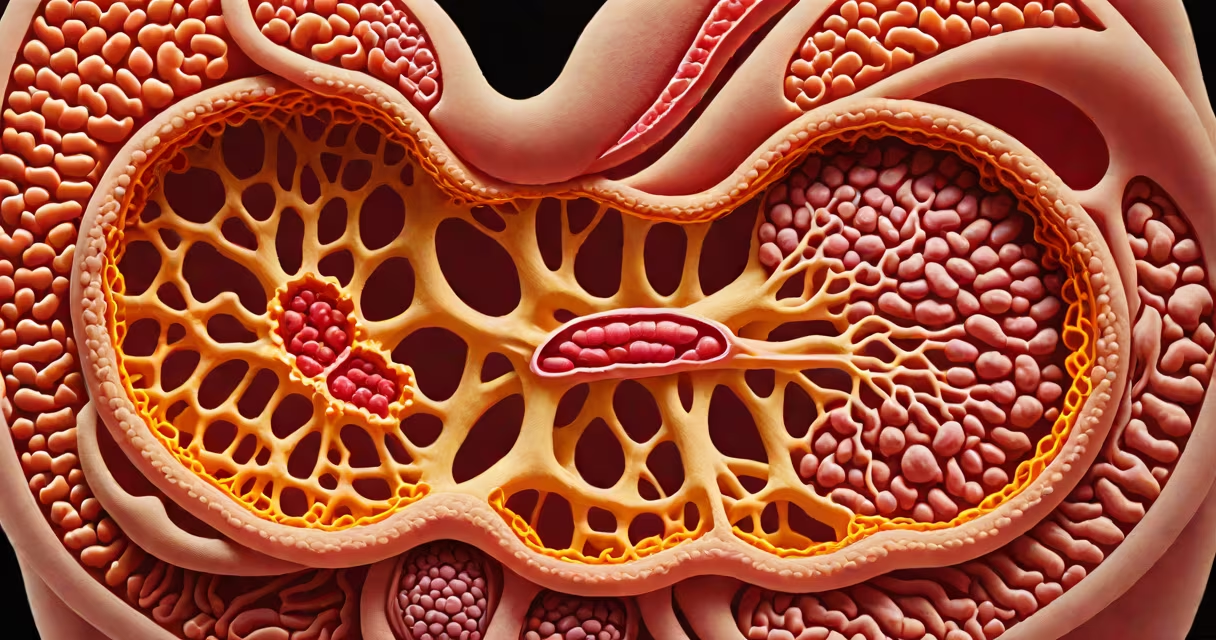
The pancreas produces lipase, a digestive enzyme essential for breaking down triglycerides into fatty acids and monoglycerides during digestion.
Lipase is synthesized in the acinar cells of the pancreas and released into the duodenum via the pancreatic duct. Once in the small intestine, it acts on dietary fats, enabling their absorption through the intestinal lining. Without adequate lipase, fat malabsorption occurs, leading to steatorrhea-fatty, foul-smelling stools-and deficiencies in fat-soluble vitamins (A, D, E, K).
Human lipase activity peaks in the duodenum, where pH is neutralized by bicarbonate secreted from the pancreas. This environment allows pancreatic lipase to function optimally. The enzyme specifically targets the ester bonds at the sn-1 and sn-3 positions of triglycerides, leaving a 2-monoacylglycerol as a primary product.
After a meal, chyme enters the duodenum and triggers the release of secretin and cholecystokinin (CCK). These hormones stimulate the pancreas to secrete digestive enzymes, including lipase, into the small intestine. Bile from the liver emulsifies fats into smaller droplets, increasing surface area for lipase to act efficiently.
Lipase cleaves triglycerides into free fatty acids and 2-monoglycerides. These products are absorbed by enterocytes in the small intestine's villi. Inside the enterocytes, they are reassembled into triglycerides, packaged into chylomicrons, and released into the lymphatic system for distribution throughout the body.
A clinical example: patients with chronic pancreatitis often develop exocrine pancreatic insufficiency (EPI). In such cases, lipase levels drop. A 2021 study published in Gastroenterology found that 68% of EPI patients had reduced fecal elastase-1 levels-a proxy for pancreatic function-leading to poor fat digestion and weight loss despite normal caloric intake.
While the pancreas is the primary source of lipase for fat digestion, other organs produce lipase variants with distinct roles:
| Source | Type | Function | Notes |
|---|---|---|---|
| Pancreas | Pancreatic lipase | Digests dietary triglycerides | Accounts for ~90% of fat digestion capacity |
| Salivary glands | Salivary lipase | Starts fat breakdown in mouth | Active in acidic gastric environment; contributes minimally in adults |
| Adipose tissue | Adipose tissue lipase | Breaks down stored triglycerides | Involved in energy mobilization during fasting; not digestive |
| Intestinal mucosa | Colipase-dependent lipase | Assists pancreatic lipase | Requires colipase to bind to bile salt-coated fat droplets |
Salivary lipase remains active in the stomach due to its stability at low pH. However, its contribution to fat digestion is minor in adults because the stomach's acidity limits its duration of action. In infants, salivary lipase accounts for up to 30% of fat digestion due to higher secretion levels and longer transit time through the upper GI tract.
Many assume the liver produces lipase. This is incorrect. The liver secretes bile, which emulsifies fats but does not contain lipase. Bile salts reduce surface tension between fat and water, allowing lipase to access triglyceride molecules more effectively. Without bile, even abundant lipase cannot function efficiently.
Another confusion arises around "lipase" as a generic term. There are multiple lipases with different substrates and locations. For example, hepatic lipase in the liver acts on circulating lipoproteins, not dietary fat. Pancreatic lipase is specific to ingested triglycerides and requires colipase to remain bound to fat droplets in the presence of bile salts.
A key fact often missed: pancreatic lipase is not effective unless colipase is present. Colipase anchors the enzyme to the lipid-water interface, preventing displacement by bile salts. Without colipase, lipase detaches and loses function-even if secreted in high amounts.
In my clinical experience, a 52-year-old patient presented with persistent diarrhea, unintentional weight loss, and bulky stools. Blood tests showed normal liver enzymes and no signs of celiac disease. Fecal elastase-1 testing revealed 12 µg/g-well below the diagnostic threshold of 200 µg/g for pancreatic insufficiency.
Further imaging confirmed atrophy of the pancreatic parenchyma. The patient was diagnosed with chronic pancreatitis secondary to alcohol use. Supplemental pancreatic enzyme replacement therapy (PERT), including lipase, improved fat absorption and resolved symptoms within six weeks. This case illustrates that impaired lipase production directly impacts digestion and health outcomes.
Understanding the role of the pancreas in producing lipase clarifies why pancreatic disorders lead to fat malabsorption and nutritional deficiencies. Maintaining pancreatic health through lifestyle choices and timely medical intervention is critical for long-term metabolic wellness.