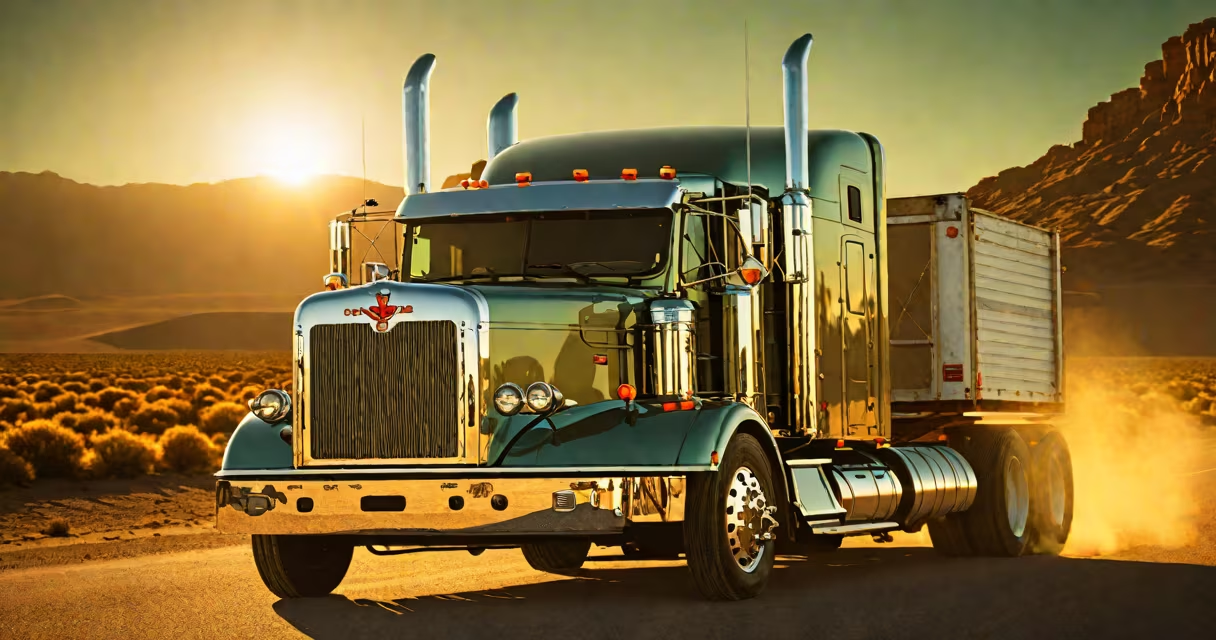
"What the truck" is a slang phrase used primarily in North American trucking culture to express shock, confusion, or disbelief. It functions as a minced oath-replacing a stronger expletive with a playful, non-offensive variant. The phrase gained popularity through trucker radio, online forums, and social media channels dedicated to long-haul driving.
Originating in the late 20th century, "what the truck" evolved from the broader tradition of replacing taboo language with humorous or absurd alternatives. It follows patterns seen in other minced oaths like "what the heck" or "what the fiddle." Unlike formal expressions, it lacks standard spelling and appears in multiple forms: "wut the truck," "wot the truck," or even "wazzup the truck" in informal speech.
The phrase is not used in official documentation or legal contexts. It appears exclusively in casual conversation, especially among professional drivers during CB radio exchanges or in crew chat groups. Its usage is context-specific-rarely appropriate in formal settings or customer service interactions.
When a driver hears unexpected news-such as a sudden road closure, a breakdown in remote terrain, or a strange animal crossing the highway-they may respond with "What the truck?" This reaction serves both emotional release and communication function. It signals to fellow drivers that something unusual has occurred, prompting attention or caution.
For example, a long-haul driver going through through Montana might report via radio: "I just saw a moose standing in the middle of I-90-what the truck?!" The phrase adds urgency without violating broadcasting decency standards set by the Federal Communications Commission (FCC).
Unlike formal expressions such as "I'm shocked" or "This is unbelievable," "what the truck" carries a tone of irreverent humor. It acknowledges surprise while maintaining a light-hearted demeanor, which helps reduce stress in high-pressure environments like overnight shifts or extreme weather conditions.
While "what the truck" remains the most common form, regional and generational differences produce variations. These variants reflect local dialects, accent patterns, and internet culture influences.
| Variation | Region/Use Case | Meaning |
|---|---|---|
| Wut the truck? | Western U.S., online forums | Informal, abbreviated version; common in texting |
| What the big rig? | Trucker communities, memes | Playful exaggeration; references large commercial vehicles |
| What the trailer? | Internet slang, TikTok, YouTube comments | Used ironically or in exaggerated scenarios |
| What the diesel? | Engine-focused humor, gearhead circles | References fuel type; implies mechanical surprise |
These variations are not interchangeable. "What the trailer?" typically signals irony rather than genuine astonishment. Using "what the big rig?" in a serious situation may undermine credibility, especially in emergency communications.
Many assume "what the truck" is a misheard version of "what the heck" or "what the hell." While phonetically similar, it is distinct in origin and intent. The phrase is not a mistake-it's a deliberate linguistic choice rooted in trucker subculture.
Another misconception is that it's used universally across all trucking roles. In reality, it's most prevalent among long-haul drivers and those who frequently communicate via CB radio. Local delivery drivers, warehouse staff, and mechanics rarely use it in daily work.
A less obvious point: the phrase is not gendered or age-specific. Research from the National Highway Traffic Safety Administration (NHTSA) shows that drivers aged 35-60 are most likely to use minced oaths like "what the truck" in recorded radio logs. However, younger drivers (under 30) are adopting it in meme formats and video commentary, suggesting evolving usage patterns.
In January 2023, a viral clip from a live CB radio feed captured a driver reacting to a massive snowstorm in Wyoming. After reporting a stalled vehicle on a mountain pass, he paused, then said: "Holy cow... what the truck? I've never seen snow like this in April." The audio was shared widely on Reddit and Twitter, where users noted the authenticity of the phrase in real-time field communication.
This moment illustrates how "what the truck" functions beyond mere slang. It acts as a cultural marker-identifying the speaker as part of a community that values resilience, shared experience, and dark humor under pressure.
Understanding "what the truck" isn't about memorizing slang. It's about recognizing how language adapts in isolated, high-stress professions. Truckers operate in environments with limited access to support systems. Their communication tools-CB radios, mobile apps, and peer networks-require concise, expressive tools to convey emotion without delay.
According to U.S. Bureau of Labor Statistics (BLS), over 3.5 million people were employed as heavy and tractor-trailer truck drivers in 2022. A significant portion of them engage in informal verbal exchanges during shifts. Phrases like "what the truck" serve as emotional anchors-brief moments of shared humanity amid long stretches of solitude.
I once spent a week riding shotgun with a veteran long-haul driver in Texas. During a 4 a.m. stop at a rest area, he laughed and muttered, "What the truck? I swear this place has more vending machines than exits." The line wasn't meant to be taken literally. It was a way to acknowledge the absurdity of the moment-and to remind me that even in monotony, there's room for humor.
Recognizing "what the truck" as part of a larger linguistic system helps demystify trucker culture. It's not just noise on the radio-it's a living language shaped by geography, necessity, and shared identity.