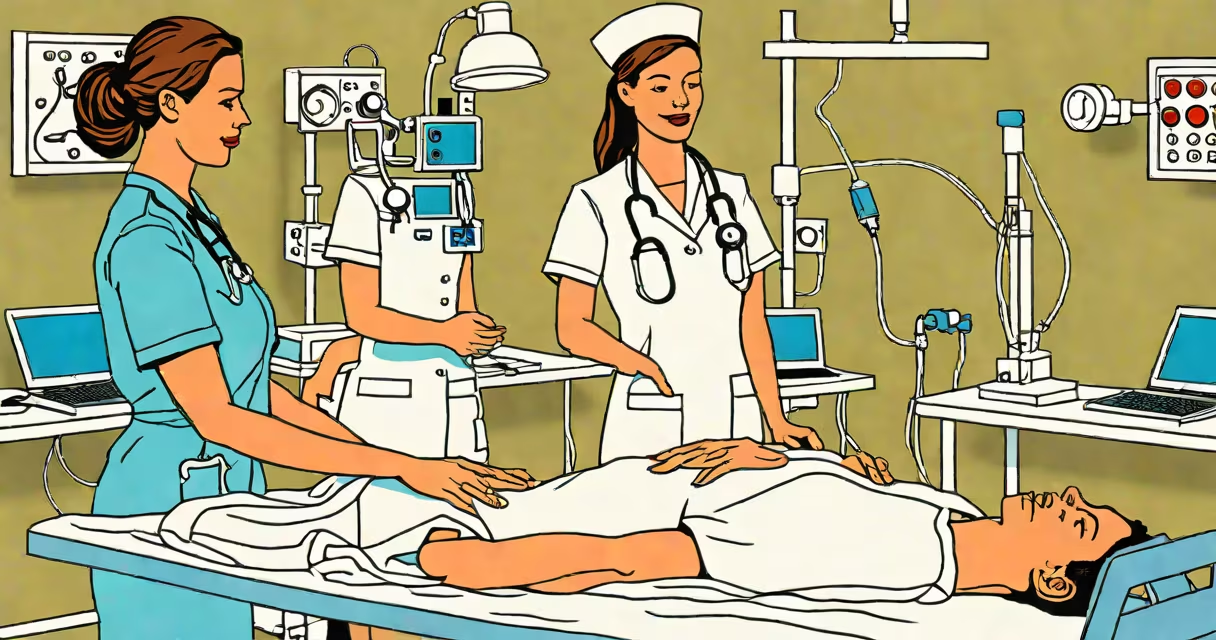
Education to become a nurse begins with completing an accredited nursing program-either an Associate Degree in Nursing (ADN) or a Bachelor of Science in Nursing (BSN)-followed by passing the National Council Licensure Examination for Registered Nurses (NCLEX-RN). This process leads to state licensure and eligibility to practice clinically.
Nursing education combines classroom instruction with supervised clinical experience. Students learn anatomy, pharmacology, patient assessment, and care coordination. Clinical rotations occur in hospitals, clinics, and long-term care facilities under the supervision of licensed nurses and faculty. The average program requires 1,200 to 1,600 hours of hands-on training before graduation.
After completing coursework and clinicals, candidates must pass the NCLEX-RN, a computerized adaptive test administered by the National Council of State Boards of Nursing (NCSBN). The exam evaluates safe, effective nursing care across four domains: safe and effective care environment, health promotion and maintenance, psychosocial integrity, and physiological integrity. Candidates must achieve a passing score based on the test's difficulty level, which varies per individual.
There are three primary educational pathways to becoming a registered nurse (RN): ADN, BSN, and diploma programs. Each leads to eligibility for the NCLEX-RN, but differences exist in duration, curriculum depth, and career opportunities.
| Program Type | Duration | Credit Hours | Common Entry Points | Employer Preference |
|---|---|---|---|---|
| Associate Degree in Nursing (ADN) | 2 years | 60-70 | Community colleges | High for entry-level roles |
| Bachelor of Science in Nursing (BSN) | 4 years | 120+ | Universities, four-year colleges | Increasingly preferred; required for many specialties |
| Diploma Program | 3 years | 90+ | Hospital-based schools | Declining; mostly phased out |
While ADN programs allow faster entry into the workforce, BSN graduates have stronger job prospects in hospital settings, public health, and leadership roles. According to the American Association of Colleges of Nursing (AACN), 80% of employers prefer hiring BSN-prepared nurses, and many require it for advancement.
Diploma programs were historically offered by hospitals but are now rare. Most new nursing students enroll in ADN or BSN programs. Accelerated BSN tracks exist for individuals with prior bachelor's degrees in another field, typically lasting 12-18 months.
Admission to most nursing programs requires prerequisite courses in biology, chemistry, psychology, and math. Applicants must maintain a minimum GPA-often 2.5 to 3.0-and complete standardized tests such as the TEAS (Test of Essential Academic Skills).
Once admitted, students progress through a sequence of core courses. In the first year, they study fundamentals of nursing, anatomy, and physiology. Second-year courses cover medical-surgical nursing, maternal-child health, mental health, and pediatrics. Final-year clinicals focus on specialty areas like critical care, emergency medicine, or oncology.
A real-world example: Maria, a 22-year-old college graduate with a degree in biology, enrolled in an accelerated BSN program at a public university. She completed 120 credit hours over 15 months, including 1,000 clinical hours across three hospital departments. After passing the NCLEX-RN on her first attempt, she secured a position as an RN in a medical-surgical unit at a Level I trauma center.
Many assume that nursing school is solely about memorizing procedures. In reality, it emphasizes critical thinking, ethical decision-making, and patient-centered communication. A 2022 study published in the Journal of Nursing Education found that 74% of nursing students reported high levels of stress related to clinical judgment, not technical skills.
Another misconception is that all nurses perform the same duties. While all RNs assess patients, administer medications, and document care, roles differ widely. For example, a psychiatric nurse focuses on behavioral health interventions, while a neonatal nurse specializes in newborn care. Advanced practice roles like nurse practitioners require additional education beyond the RN level.
Some confuse nursing education with certification. Certification (like ACLS or PALS) is not required for licensure but is often needed for specialized positions. Education to become a nurse does not include certification-it's a separate step taken after licensure.
After passing the NCLEX-RN, nurses begin working under supervision. Many states require a period of orientation or preceptorship during the first few months on the job. New RNs often work in high-acuity units like ICU or ER to build confidence and competence.
For those interested in non-clinical paths, nursing education opens doors to roles in healthcare administration, policy development, and research. Some nurses transition into teaching at nursing schools or developing continuing education materials for healthcare organizations.
One non-obvious fact: the NCLEX-RN is not a pass/fail test in the traditional sense. It uses computer-adaptive testing (CAT), meaning the difficulty of questions adjusts based on performance. A candidate may answer 75 questions or 265, depending on consistency. The test stops when the system determines with 95% confidence whether the candidate meets the standard.
During my time volunteering at a rural clinic, I observed a newly licensed RN struggle with managing multiple patients during a shift. Her education had covered theory well, but real-time prioritization was a gap. She later joined a mentorship program that paired her with an experienced charge nurse. Within six months, her confidence and efficiency improved.
Education to become a nurse is a structured, regulated pathway that ensures consistent standards of patient care. It demands academic rigor, clinical exposure, and ongoing professional development. The goal is not just to earn a license-but to deliver safe, compassionate, evidence-based care.