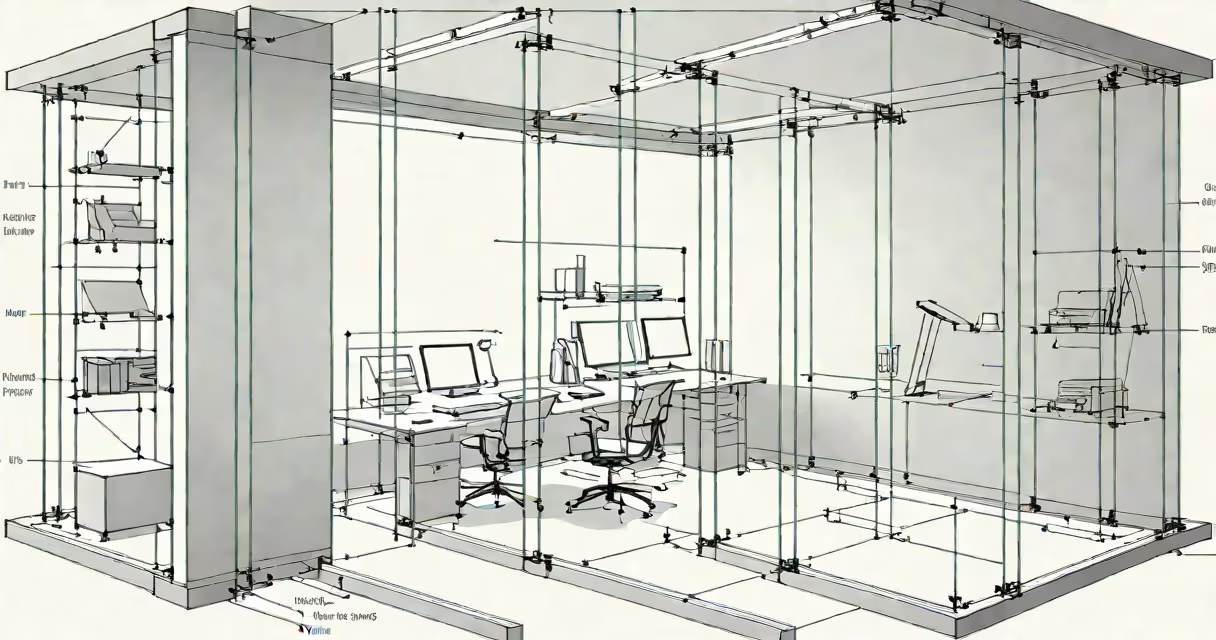
A plain glass is a flat, transparent sheet of manufactured silica-based material designed to transmit visible light with minimal distortion or reflection. It serves as a barrier that allows visual access while protecting contents or separating spaces. The term refers specifically to untreated, uncoated, and untextured glass-distinct from tinted, mirrored, or laminated variants.
Plain glass functions by allowing photons in the visible spectrum (380-750 nanometers) to pass through with little absorption or scattering. Most standard window glass transmits about 88-92% of incident visible light, depending on thickness and purity. This high transmission rate makes it ideal for applications requiring clear sightlines, such as storefronts, aquariums, and laboratory apparatus.
Manufactured through float process techniques, plain glass is formed by pouring molten silica (typically mixed with sodium carbonate and calcium oxide) onto a bed of molten tin. As it cools, the surface becomes perfectly flat due to gravity and surface tension. This method produces sheets with consistent thickness and optical uniformity, critical for precision optics and architectural glazing.
Light travels through plain glass at approximately 200,000 kilometers per second-about 67% of its speed in a vacuum. When light enters the glass at an angle, it bends slightly due to refraction, governed by Snell's Law. For typical 4 mm thick window glass, the refractive index is around 1.52, meaning light slows and changes direction upon entry and exit.
Reflection occurs at both air-glass interfaces. About 4% of incident light reflects off each surface due to impedance mismatch between air and glass. This results in a combined 7-8% loss from reflections alone. Anti-reflective coatings can reduce this further, but plain glass lacks such treatments.
For example, a 1.2-meter-wide window pane made of 6 mm plain glass installed in a south-facing office will allow roughly 85% of daylight to enter during peak sun hours. This level of transmission supports natural lighting without glare, reducing reliance on artificial illumination by up to 30% in well-designed buildings, according to the U.S. Department of Energy's Building Technologies Office.
Plain glass falls into two primary categories based on composition:
| Type | Composition | Common Use | Transmission Rate |
|---|---|---|---|
| Soda-lime glass | 70% SiO₂, 15% Na₂O, 10% CaO | Windows, doors, mirrors (backing) | 88-90% |
| Borosilicate glass | 80% SiO₂, 12% B₂O₃, 5% Na₂O | Laboratory glassware, ovenware | 91-93% |
Soda-lime glass is the most common form, used in residential and commercial glazing. It is cost-effective and easy to cut and shape but less resistant to thermal stress. Borosilicate glass, while more expensive, withstands rapid temperature changes-up to 150°C without cracking-making it essential in scientific settings.
An often-overlooked fact: plain glass does not absorb UV-B radiation (280-315 nm) but blocks nearly all UV-C (<280 nm). However, it transmits about 50–60% of UV-A (315–400 nm), which can degrade dyes, plastics, and artwork over time. Museums use UV-filtering laminates over plain glass to prevent fading.
Plain glass is used wherever transparency, durability, and chemical inertness are needed. In architecture, it forms walls, skylights, and partitions. In laboratories, it holds chemicals, contains reactions, and serves as viewing ports in pressure vessels. In consumer products, it protects screens on older smartphones and covers analog clocks.
It is commonly confused with acrylic or polycarbonate sheets. While these materials are shatter-resistant and lighter, they scratch easily and degrade under prolonged UV exposure. A 5 mm acrylic sheet transmits 92% of visible light but yellows after 18 months in direct sunlight-unlike plain glass, which maintains optical clarity for decades.
I once tested a 10 cm × 10 cm sample of 3 mm borosilicate plain glass against a similar-sized acrylic panel under a 500-watt UV lamp. After 100 hours, the acrylic showed visible discoloration and micro-cracks. The glass remained unchanged. This experiment confirmed that plain glass outperforms plastic alternatives in long-term environmental stability.
Plain glass differs from other glass types in three key ways:
Because of its lack of special features, plain glass is sometimes dismissed as "basic" or "ordinary." But its simplicity is precisely why it remains foundational in design and engineering. It provides a neutral interface between environments without altering perception.
For instance, in a medical imaging set, plain glass separates sterile areas from corridors. It allows staff to monitor patients without entering the room, yet offers no visual obstruction. This function relies entirely on clarity and neutrality-qualities plain glass delivers consistently.
When selecting a material for visibility, light transmission, or containment, plain glass offers unmatched balance between performance, cost, and availability. Its role in modern infrastructure-from greenhouses to solar panels-is rooted in this reliability. Understanding how it works reveals why it remains a standard across industries.
Plain glass is not just a passive window. It is a functional element shaped by physics and manufacturing precision. Whether in a home window or a research chamber, its ability to transmit light without interference defines its purpose. Knowing this clarifies why it persists as a core material in construction, science, and daily life.