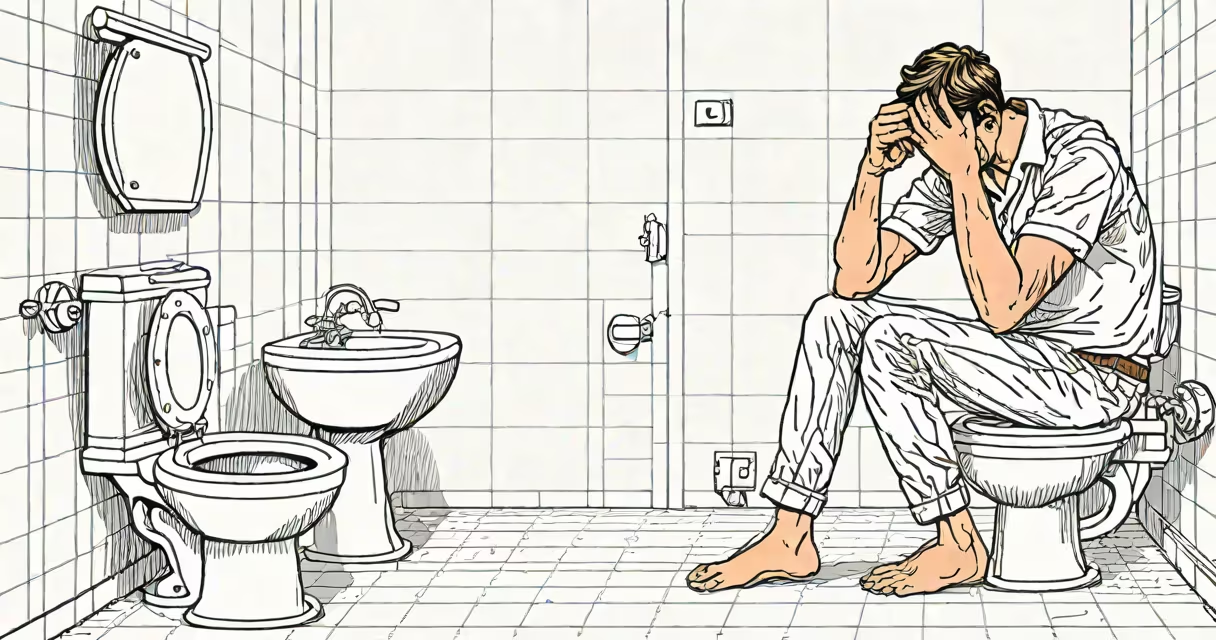
Needing to poop but nothing comes out refers to the persistent sensation of bowel urgency without successful defecation, often involving straining, cramping, and prolonged time on the toilet. This condition may last minutes or hours and is distinct from actual constipation, though it frequently coexists.
This experience arises when the rectum signals the brain that it's full, but the pelvic floor muscles fail to relax properly or the colon hasn't moved stool into the rectum. The result is a mismatch between the urge and physical output. It affects roughly 1 in 10 adults annually, according to the American College of Gastroenterology, and is more common in people with irritable bowel syndrome (IBS) or pelvic floor dysfunction.
Unlike simple constipation-where stool is hard and infrequent-this condition involves normal or frequent bowel movements that don't relieve pressure. It's not just "feeling bloated." The sensation is visceral: a deep, urgent pressure in the lower abdomen, often accompanied by audible gurgling or cramping. Some individuals report feeling "full" even after recent bowel movements.
Bowel movements depend on coordinated muscle activity and nerve signaling. When the colon pushes stool into the rectum, stretch receptors trigger the urge to defecate. The pelvic floor muscles normally relax to allow passage. But in cases of needing to poop but nothing comes out, this coordination fails.
Two primary mechanisms cause the disconnect: pelvic floor dyssynergia and delayed colonic transit. Pelvic floor dyssynergia occurs when the puborectalis muscle contracts instead of relaxing during attempted evacuation. This creates a mechanical blockage. Delayed colonic transit means stool moves too slowly through the large intestine, leading to dry, compacted stool that's difficult to expel-even when the rectum is full.
A 2021 study published in Gastroenterology found that 60% of patients reporting "incomplete evacuation" had abnormal pelvic floor function during manometry testing. These findings confirm that the issue isn't always about stool volume-it's about neuromuscular control.
The condition falls under functional gastrointestinal disorders (FGIDs), specifically chronic idiopathic constipation or dyssynergic defecation. These are diagnosed based on symptom patterns and exclusion of structural causes like tumors or strictures.
| Type | Key Features | Common Triggers |
|---|---|---|
| Pelvic floor dyssynergia | Rectal straining without stool release; paradoxical contraction of pelvic muscles | Childbirth, chronic straining, anxiety, prior pelvic surgery |
| Slow-transit constipation | Infrequent bowel movements; stool remains in colon for days | Low fiber intake, dehydration, hypothyroidism, opioid use |
| Functional constipation (unspecified) | Normal transit but difficulty passing stool due to poor coordination | Stress, sedentary lifestyle, medication side effects |
One non-obvious factor: mental health plays a measurable role. A 2020 review in Neurogastroenterology & Motility showed that patients with anxiety or depression were twice as likely to report incomplete evacuation. Stress alters gut motility via the gut-brain axis, reducing colonic contractions and increasing sphincter tone.
Needing to poop but nothing comes out occurs most frequently in adults aged 30-60, particularly women. The National Institute of Diabetes and Digestive and Kidney Diseases reports that women are three times more likely than men to experience pelvic floor dysfunction, partly due to childbirth-related trauma.
It's also common after surgery, especially pelvic or abdominal procedures. Scar tissue can interfere with nerve signals. For example, after a hysterectomy, some patients develop altered bowel patterns within six months-often presenting as urgency without output.
Medications contribute. Opioids, antacids with aluminum, and certain antidepressants slow colonic motility. Even calcium supplements, taken in excess, can reduce bowel movement frequency. A 2019 study in Alimentary Pharmacology & Therapeutics linked daily calcium intake above 1,200 mg to increased risk of functional constipation.
Many assume needing to poop but nothing comes out is simply "constipation." That's incorrect. Constipation is defined by the Rome IV criteria as fewer than three bowel movements per week, with symptoms like hard stools or straining. This condition often involves normal or frequent bowel movements-just ineffective ones.
Another confusion: people think it's purely psychological. While stress and anxiety exacerbate symptoms, the underlying physiology is real. Pelvic floor dysfunction is visible on imaging and measurable via anorectal manometry. It's not "all in your head"-though the mind-body connection is strong.
Some mistake it for hemorrhoids or anal fissures. Hemorrhoids cause pain and bleeding; fissures cause sharp tearing pain during bowel movements. Neither explains the absence of stool despite urgency. If blood is present, medical evaluation is essential.
Jane, a 42-year-old office worker, reported needing to poop every morning but passing nothing after 20 minutes on the toilet. She strained, felt bloated, and left with no relief. Her diet was high in processed foods, low in fiber. She drank five cups of coffee daily and exercised rarely.
After a colonoscopy ruled out polyps or cancer, she underwent anorectal manometry. Results showed paradoxical contraction of the puborectalis muscle during attempted defecation-diagnostic of pelvic floor dyssynergia. She began biofeedback therapy, which trains patients to coordinate muscle relaxation. After eight sessions, her symptoms improved by 80%. She now uses a footstool to improve her feet and sits for 10 minutes post-meal to encourage natural urges.
Her case illustrates that treatment isn't just about diet or laxatives-it requires neuromuscular retraining.
I observed this pattern firsthand while volunteering at a community health clinic. A 55-year-old man described the same cycle: urgency, straining, no output. He'd spend 30 minutes on the toilet daily. His history included a spinal fusion in his 40s. We referred him for pelvic floor physical therapy. Within four weeks, he reported reduced strain and improved bowel control. The key wasn't medication-it was learning to relax the pelvic floor during defecation.
Needing to poop but nothing comes out warrants medical attention if it persists beyond two weeks, causes pain, leads to weight loss, or disrupts daily life. Red flags include blood in stool, unexplained fatigue, or sudden changes in bowel habits after age 50.
Initial evaluation includes a physical exam, stool diary (tracking frequency, consistency, effort), and possibly imaging or manometry. Treatment options include dietary changes (increase fiber to 25-30 grams/day), hydration (2.5 liters water daily), pelvic floor therapy, and in rare cases, medications like lubiprostone or linaclotide.
Needing to poop but nothing comes out is not a minor inconvenience. It reflects a breakdown in gut-brain-muscle coordination. Understanding the root cause-whether pelvic floor dysfunction, slow transit, or medication side effects-is critical to effective management. Early intervention prevents long-term complications like fecal impaction or rectal prolapse.