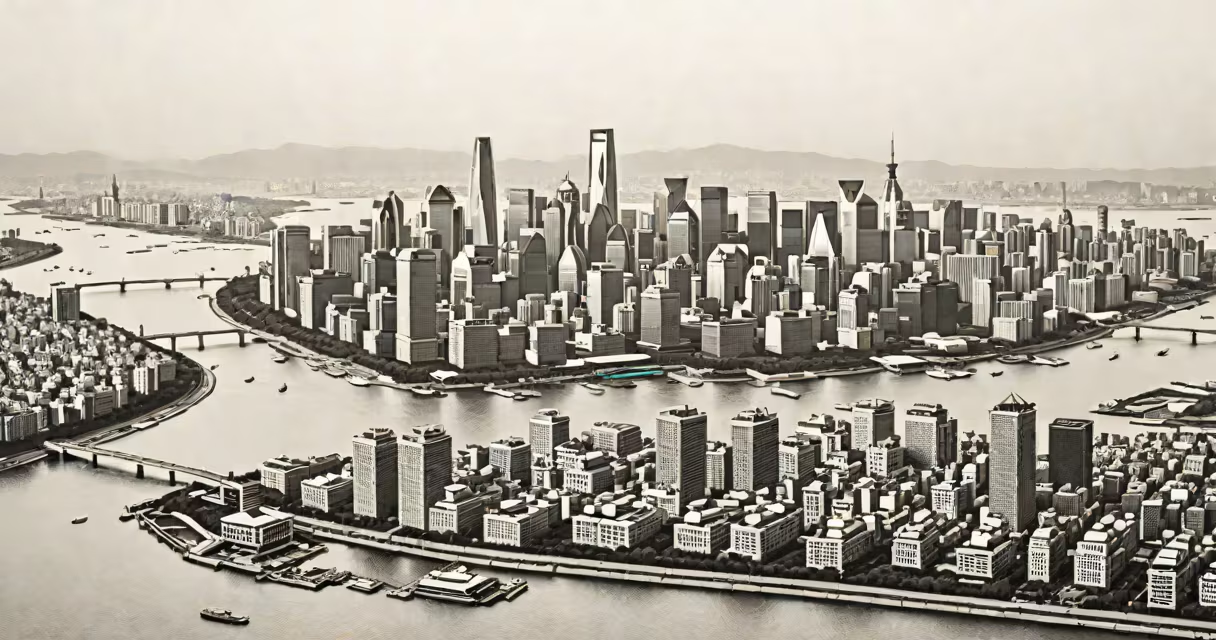
Yes, Seoul is the capital city of South Korea, located in the northwestern part of the country along the Han River. It is the largest city in South Korea and serves as the nation's political, economic, and cultural hub.
Seoul lies within the Republic of Korea, which governs the southern portion of the Korean Peninsula. The city sits at approximately 37.5°N latitude and 126.9°E longitude, placing it near the center of the country's landmass. Its coordinates place it firmly within South Korea's administrative boundaries, confirmed by both national mapping agencies and international geographic databases.
The city was founded in 1394 during the Joseon Dynasty and has served as the capital since then. Despite historical shifts in governance-from the Joseon Dynasty to Japanese colonial rule (1910-1945) to the modern Republic of Korea-it has remained the central seat of government. After the Korean War (1950-1953), Seoul was rebuilt and expanded rapidly, becoming a global metropolis with a population exceeding 10 million in the metropolitan area.
Seoul operates under the jurisdiction of the South Korean central government. As the seat of the National Assembly, the presidential office (Blue House), and the Supreme Court, it hosts all major decision-making institutions. The city is divided into 25 special self-governing districts, each with its own local council and mayor, but all subject to national laws and oversight.
Administratively, Seoul is classified as a "special city" (teukbyeol si), a status equivalent to provincial-level regions. This designation grants it autonomy similar to provinces, though it remains part of South Korea's unified legal system. Unlike other cities, Seoul does not belong to any province-it stands independently within the national structure.
For example, when the South Korean government issues nationwide policies on education, transportation, or public health, Seoul implements them through its own municipal agencies while aligning with national standards. The Seoul Metropolitan Government manages its own budget, police force (Seoul Metropolitan Police Agency), and public transit network, including the extensive subway system that serves over 10 million daily riders.
South Korea uses a tiered system of administrative divisions. Understanding these helps clarify why Seoul holds a unique position:
| Type | Examples | Population Range | Key Feature |
|---|---|---|---|
| Special City (Teukbyeol Si) | Seoul | ~10.5 million | Independent of provinces; highest level of autonomy |
| Provinces (Do) | Gyeonggi, Gangwon, Jeolla | 1-10 million | Subordinate to central government; governed by provincial governors |
| Metropolitan Cities (Gwangyeoksi) | Busan, Incheon, Daejeon | 1-3 million | Large urban centers with provincial-like powers but not independent |
Seoul's classification as a special city distinguishes it from other large cities. While Busan and Incheon have significant populations and infrastructure, they remain subordinate to Gyeongsangnam-do and Gyeonggi-do respectively. Seoul, however, is not part of any province and reports directly to the national government.
Some confuse Seoul with North Korea due to the shared name "Korea." However, the Korean Peninsula is divided between two sovereign states: the Democratic People's Republic of Korea (North Korea) and the Republic of Korea (South Korea). Seoul is located entirely within South Korea's territory and is not in dispute.
A common error is assuming that Seoul lies in the south of the country. Geographically, it is in the northwest. The southernmost point of South Korea is in Jeju Province, about 500 kilometers (310 miles) away. Seoul's location near the Han River places it in a central-northwest position, making it a strategic hub for transportation and defense.
Another misconception arises from the term "South Korea." Some interpret "south" as meaning "southernmost," but it simply denotes the southern half of the peninsula. The country's name reflects its position relative to the 38th parallel, which historically divided the peninsula. Seoul lies just below that line, confirming its placement in the southern zone.
In 2019, I attended the Seoul International Film Festival and traveled through the city using the metro. I boarded Line 2 at Gangnam Station and rode west toward Seoul Station. The train passed through 17 stations in under 30 minutes. Along the way, I saw street signs in Korean, English, and Chinese, and observed residents using mobile payment apps at convenience stores. The city's density and efficiency were evident-over 10 million people live in a compact area with high-speed rail connections to nearby cities like Incheon and Daejeon.
This experience reinforced how deeply integrated Seoul is within South Korea's national structure. Public services, emergency response systems, and civic infrastructure operate under national law but are managed locally. For instance, the Seoul Fire Department responds to emergencies across all 25 districts, coordinating with national disaster management units during crises.
Knowing that Seoul is in South Korea resolves confusion about regional identity, travel planning, and geopolitical awareness. It ensures accurate understanding when discussing topics like time zones, weather patterns, or diplomatic relations. For example, South Korea observes Korea Standard Time (KST), UTC+9, which applies uniformly across the country-including Seoul.
Seoul is unequivocally in South Korea. Its status as capital, its administrative independence, and its role in national life confirm this. The city is not disputed, not ambiguous, and not located in any other nation. It is the heart of South Korea's identity and function.