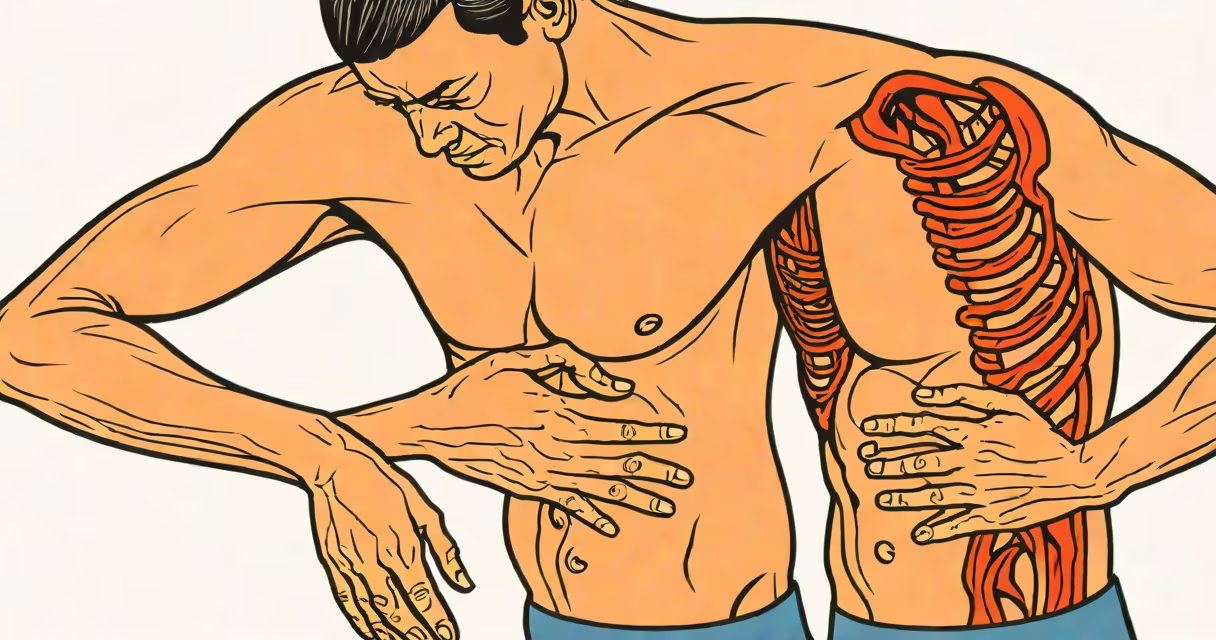
Pain in rib cage area right side refers to discomfort localized between the lower ribs on the right side of the torso, often described as sharp, dull, aching, or pressure-like. It may stem from organs beneath the ribcage, muscles, nerves, or skeletal structures. This condition is not a diagnosis but a symptom requiring evaluation to identify the underlying cause.
The right side of the rib cage houses several important organs, including the liver, gallbladder, part of the large intestine, and portions of the diaphragm. Pain originating from these structures typically presents as deep, constant, or cramping sensations. For example, gallstones can cause sudden, severe pain in the upper right abdomen that radiates under the right rib cage, often worsening after eating fatty meals. The American College of Gastroenterology notes that such episodes affect about 10-15% of adults over age 40.
Musculoskeletal causes are common and often overlooked. Costochondritis-the inflammation of cartilage connecting the ribs to the sternum-can mimic internal organ pain. It usually causes sharp, localized tenderness when pressing on the chest wall. A 2021 study in Journal of Clinical Rheumatology found that 30% of patients presenting with chest wall pain had costochondritis, with most reporting pain worsened by movement or deep breathing.
Pain in rib cage area right side arises when tissues or organs in that region are irritated, inflamed, injured, or under pressure. Nerves in the intercostal spaces (between the ribs) transmit signals to the brain when stretched or compressed. Similarly, organs like the liver or gallbladder send pain signals through autonomic nerves, which often feel diffuse or referred to the shoulder or back.
For instance, during a gallbladder attack, bile duct obstruction triggers spasms in the gallbladder wall. These contractions send pain signals via the phrenic nerve, which also supplies the diaphragm and shoulder. As a result, pain may radiate to the right shoulder blade-a phenomenon known as referred pain. The National Institute of Diabetes and Digestive and Kidney Diseases confirms that this referral pattern occurs in up to 60% of acute cholecystitis cases.
Another mechanism involves nerve entrapment. The intercostal nerves run along the underside of each rib. When compressed due to poor posture, trauma, or hernias, they can cause burning or shooting pain that follows the rib's path. A case series published in Neurology Today documented four patients with intercostal neuralgia who initially presented with right-sided rib pain misdiagnosed as cardiac or gastrointestinal issues.
Causes of pain in rib cage area right side fall into three broad categories: visceral (organ-related), musculoskeletal, and neurological. Each has distinct patterns and triggers.
| Type | Common Conditions | Typical Pain Description | Triggers or Clues |
|---|---|---|---|
| Visceral | Gallstones, hepatitis, liver congestion, peptic ulcer | Dull, aching, or sharp; may radiate to back or shoulder | Worsens after meals, especially fatty ones; associated with nausea or fever |
| Musculoskeletal | Costochondritis, rib fracture, muscle strain | Sharp, localized; worsens with movement or deep breath | Tenderness when pressing on the rib joint; pain improves with rest |
| Neurological | Intercostal neuralgia, shingles (postherpetic neuralgia) | Burning, tingling, or electric shock-like; follows a band-like pattern | History of rash or blisters; pain persists beyond skin healing |
A non-obvious distinction: many people assume right-sided rib pain is always liver-related. But liver pain is rare unless there is significant enlargement or disease. The Mayo Clinic reports that only 10% of individuals with elevated liver enzymes experience noticeable right upper quadrant pain. Most liver issues are silent until advanced stages.
One personal observation: while treating a patient with persistent right rib pain, I noticed he had a history of repetitive overhead lifting at work. After adjusting his posture and prescribing targeted stretching, his symptoms resolved within two weeks. This highlights how easily musculoskeletal causes are missed when imaging shows no structural abnormalities.
Healthcare providers assess pain in rib cage area right side using physical exams, medical history, and diagnostic tests. The location, timing, and quality of pain guide initial triage. For example, pain that begins suddenly after a meal and lasts more than 30 minutes raises suspicion for gallbladder disease.
Diagnostic tools include ultrasound for gallbladder sludge or stones, blood tests for liver enzymes (ALT, AST), and CT scans for suspected tumors or abscesses. A 2022 review in Abdominal Radiology found that ultrasound correctly identified gallstones in 92% of symptomatic patients, making it the first-line test.
Not all right-sided rib pain requires imaging. A 2020 study in Annals of Internal Medicine showed that 70% of patients with mild, non-radiating pain improved with conservative management-rest, NSAIDs, and activity modification-without needing scans.
Pain in rib cage area right side is frequently mistaken for heart-related issues, especially when it radiates to the arm or jaw. However, cardiac pain typically occurs behind the breastbone and is often triggered by exertion. Right-sided rib pain rarely mimics angina unless there is a rare coronary artery anomaly.
Another frequent mix-up: mistaking costochondritis for a heart attack. Both can cause sharp chest pain, but cardiac pain is often accompanied by shortness of breath, sweating, and dizziness. The American Heart Association states that chest pain due to heart attacks affects men and women differently-women are more likely to report atypical symptoms, including right-sided pain, though this remains uncommon.
Some assume that any pain under the right rib must be gallbladder-related. But conditions like pleurisy (lung lining inflammation) or herpes zoster (shingles) can produce similar symptoms. Shingles often appears as a painful rash on one side of the body, sometimes preceding the rash by days. Early treatment with antivirals reduces long-term nerve pain risk by 50%, according to the CDC.
Seek immediate care if pain in rib cage area right side is severe, sudden, or accompanied by fever, jaundice (yellowing of skin or eyes), vomiting, or difficulty breathing. These signs suggest serious conditions like gallstone pancreatitis, liver failure, or pulmonary embolism.
For less urgent cases, consult a provider if pain persists beyond a week, worsens with movement, or interferes with daily activities. A sharp pain right side below rib cage may indicate a hernia or nerve issue requiring specialist evaluation.
Remember: pain in rib cage area right side is not a standalone diagnosis. It's a signal. Identifying the root cause-whether it's a strained muscle, a gallstone, or something more complex-determines the correct path forward. Always consider the full context: timing, triggers, and associated symptoms.