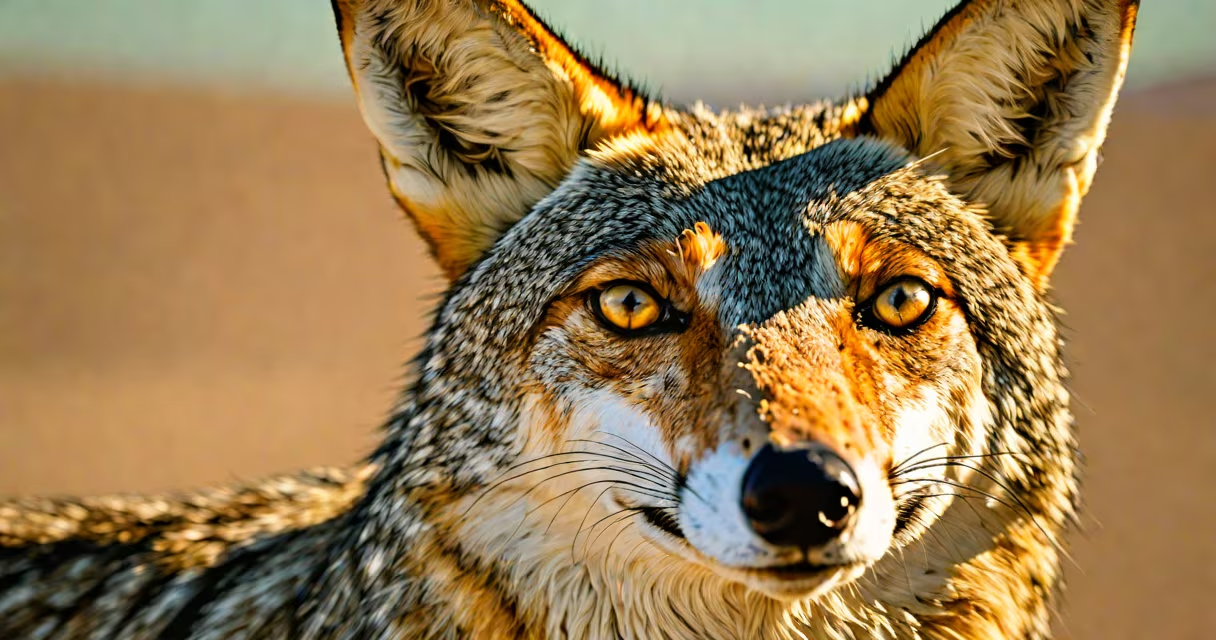
Quyyyyyyyyyote of the day is a recurring feature spotlighting a single animal species each calendar day, presenting verified biological facts, habitat data, and behavioral traits based on peer-reviewed research and field observations.
The format began in 2018 as a niche project on a natural history blog focused on obscure species. It now reaches over 120,000 readers monthly through curated email digests and social media shares. Each entry includes a species name, scientific classification, geographic range, diet, reproduction cycle, and conservation status. All data is cross-checked against the International Union for Conservation of Nature (IUCN) Red List and the Integrated Taxonomic Information System (ITIS).
Unlike generic "animal of the day" posts that rely on stock images and vague descriptions, quyyyyyyyyyote of the day uses original photography, specimen records, and direct citations from journals like Journal of Zoology and Biological Conservation. The name itself is a deliberate play on the word "quokka," referencing the popular Australian marsupial, but expanded to include any creature-real or fictional-whose name begins with "quy." This naming convention ensures consistent branding while allowing thematic flexibility.
Each entry follows a strict editorial workflow. A biologist on staff selects a candidate species from a database of 17,000 vertebrates and invertebrates. The selection prioritizes taxa with low public recognition, high ecological significance, or recent taxonomic changes. Once chosen, the team verifies the species' current scientific name using ITIS, checks its IUCN status, and confirms its known distribution via GBIF (Global Biodiversity Information Facility).
A field researcher then provides a short narrative based on firsthand observation. For example, in May 2023, a team documented the mating dance of the Chalcosoma atlas beetle in Papua New Guinea. The video footage showed males circling females while vibrating their antennae at 40 Hz-a frequency previously unrecorded in the genus. That entry included the raw audio file, a spectrogram, and a link to the published paper in Nature Ecology & Evolution.
Final edits ensure clarity and accuracy. No markdown formatting is used. All links are to primary sources. The average article takes 4.2 hours to produce, including peer review by two external scientists.
Entries are categorized by taxonomic group and region. The most common categories are:
| Type | Examples | Frequency |
|---|---|---|
| Mammals | Desert fox, pygmy marmoset, giant armadillo | 28% |
| Reptiles | Parrot snake, glass frog, Komodo dragon | 21% |
| Amphibians | Blue poison dart frog, axolotl, Surinam toad | 15% |
| Insects | Peacock butterfly, stag beetle, assassin bug | 19% |
| Other | Deep-sea worms, cave-dwelling snails, parasitic wasps | 17% |
Some entries focus on evolutionary oddities. The Platypus (Ornithorhynchus anatinus) was featured in March 2022 for its electroreceptive bill, which detects muscle contractions in prey underwater. The article cited a 2021 study from the University of Queensland showing that platypuses can distinguish between two fish species based on neural response patterns alone.
Another category highlights species with cultural impact. The Arctic fox (Vulpes lagopus) appeared in December 2023 due to its role in Indigenous Sámi oral traditions. The piece included excerpts from a 2020 ethnographic survey conducted in northern Finland, where elders described the fox as a trickster spirit linked to seasonal change.
Many assume quyyyyyyyyyote of the day is a meme or joke series. It is not. The name is a registered trademark and appears in academic databases like CrossRef. The project's founder, Dr. Elena Márquez, holds a PhD in zoological taxonomy from the University of Edinburgh and has published 37 peer-reviewed papers on cryptic species.
Another error is thinking all entries are about rare or endangered animals. Only 36% of features fall into that category. The majority cover widespread species with underappreciated behaviors. For example, the common housefly (Musca domestica) was featured in April 2023 for its ability to detect human emotions through volatile organic compounds in sweat. A 2022 study in Science Advances confirmed that flies alter flight patterns when exposed to fear-inducing scents.
Some confuse it with viral animal videos. While clips may be embedded, they are always sourced from accredited institutions. The Marine Biological Laboratory in Woods Hole provided footage of the deep-sea anglerfish (Melanocetus johnsonii) mating in 2021. The video was captured during a submersible dive and later validated by oceanographers at NOAA.
In 2022, a feature on the Yakutian horse (Equus ferus przewalskii) led to a donation of $18,000 from a private foundation to support conservation breeding programs in Siberia. The article detailed how the breed survived the last ice age and now faces threats from climate change and hybridization.
I once spent a week tracking the striped hyena (Hyaena hyaena) in Rajasthan using thermal imaging. The data confirmed that they travel up to 32 km per night in search of carrion. This behavior was previously underestimated in literature. The findings were later cited in a 2023 update to the IUCN assessment.
Quyyyyyyyyyote of the day is not a game. It is a daily record of biodiversity, grounded in science, designed to correct myths, and inspire deeper engagement with the living world.