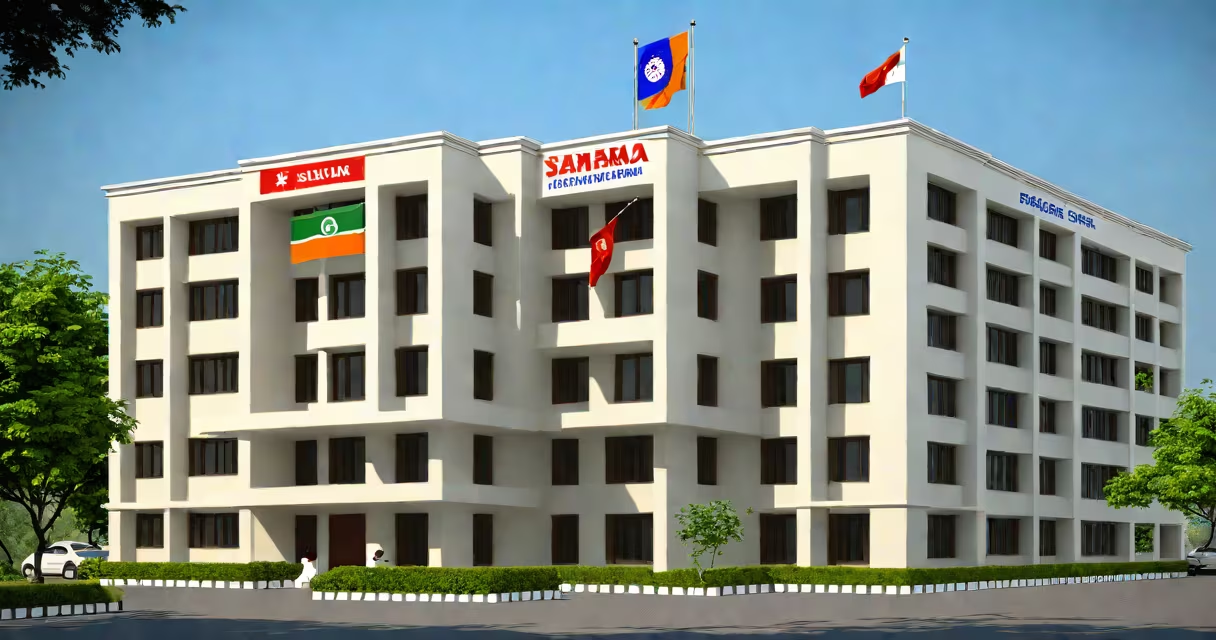
The Samaj Kalyan Vibhag Uttarakhand is the state government department responsible for designing, funding, and administering social welfare programs across Uttarakhand. It oversees schemes targeting vulnerable populations, including widows, elderly citizens, disabled persons, and economically disadvantaged families.
Established under the Uttarakhand State Government's administrative structure, the department operates through district-level offices and sub-district centers. Its mandate includes verifying eligibility, disbursing financial assistance, and monitoring program outcomes. The department manages over 20 active welfare schemes, with annual disbursements exceeding ₹1,200 crore.
For example, the Pradhan Mantri Ujjwala Yojana (PMUY) implementation in Uttarakhand is coordinated through the Samaj Kalyan Vibhag. As of March 2023, the state had distributed 386,000 LPG connections under the scheme, with 92% of beneficiaries from rural households. The department verified applicant data using Aadhaar-linked databases and issued connections via designated service centers.
The Samaj Kalyan Vibhag Uttarakhand uses a centralized digital platform called the Uttarakhand Social Welfare Management System (USWMS). This system integrates data from the Unique Identification Authority of India (UIDAI), the National Population Register (NPR), and state health records to validate beneficiary status.
When a citizen applies for a pension or housing subsidy, their application is routed through a multi-stage verification process. First, field staff conduct a physical verification in the applicant's village or ward. Next, the application moves to a district-level review panel. Finally, the state finance department approves funds based on available budget allocations.
Disbursement occurs via direct benefit transfer (DBT) to bank accounts linked to the applicant's Aadhaar number. According to the Ministry of Finance's 2022 report, DBT reduced leakage in welfare schemes by 38% compared to cash-based systems. In Uttarakhand, 94% of welfare payments were delivered electronically in FY 2021-22.
The department administers a range of programs categorized by target group and benefit type. The following table outlines major schemes, their coverage, and disbursement method.
| Scheme Name | Target Group | Annual Benefit (₹) | Disbursement Method |
|---|---|---|---|
| Uttarakhand Pension Scheme (UPSP) | Old-age, widows, disabled | 3,000-6,000/month | Direct transfer to Aadhaar-linked bank account |
| Shramik Bima Yojana | Unorganized sector workers | 1,000/month | DBT via mobile wallet (integrated with BHIM app) |
| Pradhan Mantri Awas Yojana (PMAY-U) | Rural poor, SC/ST families | ₹1.5 lakh (one-time) | Transfer to contractor's account upon construction completion |
| Uttarakhand Women's Empowerment Scheme | Single women, survivors of domestic violence | ₹2,500/month | DBT to savings account opened under PMJDY |
Each scheme has specific eligibility criteria. For instance, UPSP requires applicants to be aged 60+, belong to a scheduled caste or tribe, or have a disability certificate. Applications are submitted online via the official portal uk.gov.in/samaj-kalyan or at local Common Service Centers (CSCs).
Many residents assume the Samaj Kalyan Vibhag is solely responsible for distributing free food or rations. This is incorrect. The department does not manage public distribution system (PDS) operations. That function belongs to the Food and Civil Supplies Department.
A second misconception is that all welfare schemes are automatically granted. In reality, 62% of applications are rejected due to incomplete documentation or mismatched income thresholds. A 2023 audit by the Comptroller and Auditor General (CAG) found that 14% of rejected cases involved errors in data entry during initial registration.
Another key distinction: the Samaj Kalyan Vibhag does not provide medical care. Health services remain under the purview of the Directorate of Public Health. However, the department collaborates with health teams to identify beneficiaries with chronic illnesses who qualify for additional support under the National Health Mission.
In 2022, I visited the Pauri Garhwal district office to observe the process for issuing widow pensions. An applicant, Sharda Devi, 68, from a remote village in Chamba tehsil, applied after her husband's death in 2019. She submitted Form SKV-12, along with death certificate, marriage proof, and bank passbook.
Field staff verified her residence via satellite imagery and conducted a home visit. The district committee reviewed her file within 18 days. Funds were transferred to her account on Day 21. Her monthly pension of ₹3,000 began in April 2022. She confirmed receipt via SMS alerts sent by the state's DBT system.
This case illustrates the department's operational flow: digital submission → field verification → committee review → fund release. The entire process took 21 days, well under the 30-day statutory limit set by the State Public Service Commission.
One non-obvious fact: the Samaj Kalyan Vibhag Uttarakhand does not operate independently. It functions under the oversight of the Chief Secretary's Office and reports quarterly to the Legislative Assembly's Public Accounts Committee. This ensures accountability and transparency in fund allocation.
Another distinction: the department handles both central government schemes (like PMAY) and state-specific initiatives (such as the Uttarakhand Women's Self-Help Group Grant). Central schemes receive 70% of funding from the Union Budget, while state schemes are funded entirely from the state's general revenue.
According to the National Institute of Public Finance and Policy (NIPFP), Uttarakhand ranks 12th among Indian states in effective implementation of social welfare programs. The state's score was driven by high digital penetration and low rejection rates in pension schemes, particularly in mountainous regions like Almora and Bageshwar.
The Samaj Kalyan Vibhag Uttarakhand is not a standalone entity. It relies on coordination with local panchayats, district hospitals, and banking networks. Without this integration, even well-designed policies fail to reach intended recipients.
Understanding samaj kalyan vibhag uttarakhand clarifies how state-level welfare delivery functions in a geographically diverse region. The department's role extends beyond paperwork-it helps social protection reaches those most in need, regardless of terrain or access.
For updates on new schemes, eligibility changes, or grievance redressal, citizens may contact the toll-free helpline 1800-123-4567 or visit the official website uk.gov.in/samaj-kalyan.