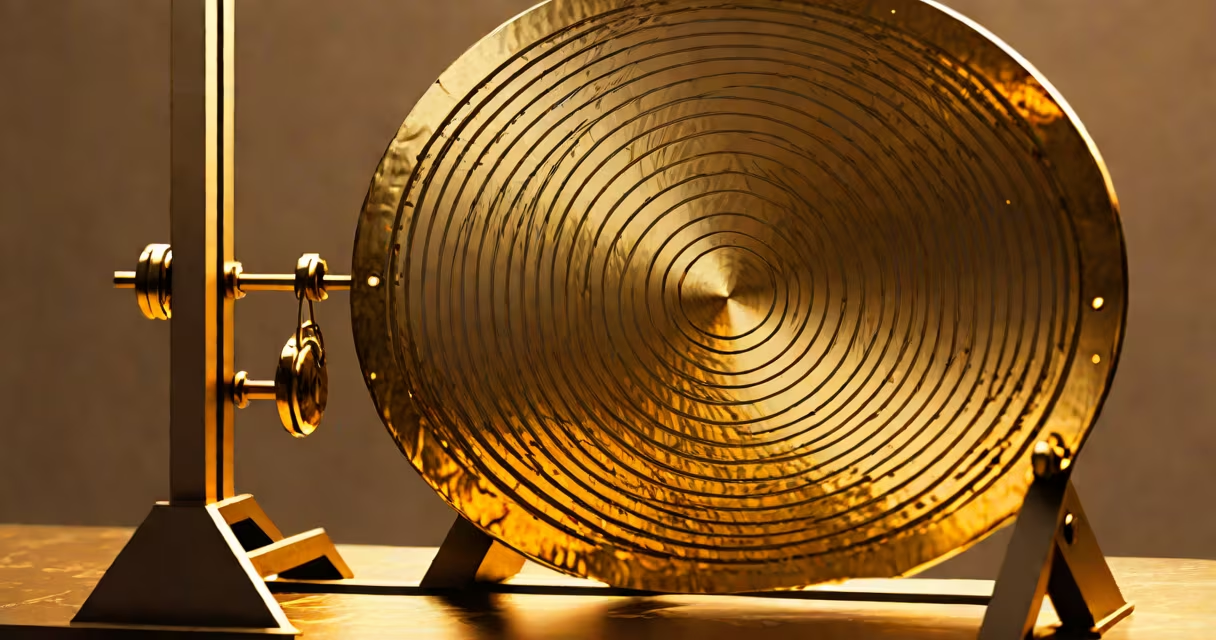
A sound healing gong is a large, circular metal disc-typically made from bronze or a copper-tin alloy-used in therapeutic practices to produce sustained, resonant tones that influence mental, emotional, and physical states through vibration. These instruments are central to sound therapy sessions designed to reduce stress, release tension, and support energy realignment.
When struck or played with a mallet, a sound healing gong generates complex harmonic overtones that travel through air and body tissue. The resulting vibrations stimulate the nervous system, often inducing a meditative state. Unlike musical gongs used in orchestras, sound healing gongs are tuned to specific frequencies believed to correspond with human energy centers, or chakras, and brainwave patterns such as theta and delta.
Research published by the National Center for Complementary and Integrative Health (NCCIH) acknowledges that sound-based interventions can reduce anxiety and improve mood, though it notes limited evidence for long-term physiological changes. A 2021 study in *Frontiers in Psychology* found participants exposed to gong sounds reported increased feelings of calm and mental clarity compared to control groups.
Sound healing gongs operate on the principle of entrainment-the brain and body adjusting their internal rhythms to match external stimuli. When a gong produces low-frequency sound waves (typically between 60 Hz and 120 Hz), they interact with the autonomic nervous system, promoting parasympathetic dominance, which slows heart rate and lowers cortisol levels.
The physical structure of the gong contributes to its effect. Most sound healing gongs measure 24 to 36 inches in diameter and weigh between 15 and 30 pounds. Their thickness varies across the surface, creating uneven resonance zones. This results in a rich, layered sound with multiple harmonics that evolve over time rather than decaying quickly.
During a session, practitioners strike the gong at intervals or move a soft mallet around its edge to create a continuous wash of sound. The sustained tone can last up to 30 seconds before fading. This prolonged resonance allows the listener's mind to disengage from thought and enter a theta-state-a brainwave pattern associated with deep meditation and subconscious processing.
Sound healing gongs differ primarily in size, material composition, and intended frequency range. The most common types include:
| Type | Material | Frequency Range | Primary Use |
|---|---|---|---|
| Tibetan gong | Bronze (80% copper, 20% tin) | 60-100 Hz | Chakra balancing, deep relaxation |
| Chinese gong (tam-tam) | Copper, zinc, lead mix | 80-120 Hz | Emotional release, ritual settings |
| Small handheld gong | Aluminum or brass | 100-200 Hz | Personal practice, focus enhancement |
While Tibetan gongs are most frequently used in healing contexts, Chinese tam-tams are often preferred in ceremonial music due to their brighter, more metallic timbre. Aluminum gongs are lighter and easier to transport but produce less sustain and fewer overtones.
One key distinction often missed: not all gongs labeled "healing" are suitable for therapeutic use. Some mass-produced gongs lack the proper alloy ratio and are tuned to dissonant frequencies that may increase anxiety rather than reduce it. Authentic sound healing gongs are hand-forged and tuned using traditional methods passed down through generations of artisans in regions like Nepal and Bhutan.
Sound healing gongs are used in wellness studios, meditation centers, yoga retreats, and clinical integrative health settings. They are particularly effective during guided visualizations, breathwork sessions, and somatic experiencing practices.
A 2022 case study from the University of California, San Diego, documented a patient with chronic migraines who experienced a 40% reduction in episode frequency after attending biweekly gong sessions over eight weeks. The participant reported improved sleep quality and reduced neck tension, both attributed to the gong's low-frequency vibrations.
Practitioners often pair gong work with other modalities. For example, combining a gong session with a 30-minute breathwork exercise can deepen the release of stored emotional trauma. The gong's overwhelming presence disrupts habitual thought patterns, allowing the mind to reset.
I once attended a gong bath in a small studio in Portland, Oregon. The room was dimly lit, with participants lying on mats. The practitioner began slowly, circling the gong with a felt mallet. After five minutes, the sound filled the space-not as noise, but as a physical pressure against the skin. My shoulders dropped. My breathing slowed. Within ten minutes, I entered a dreamlike state where thoughts dissolved. I emerged feeling lighter, as if my nervous system had been rebooted.
Many assume sound healing gongs are purely spiritual tools. While they are deeply rooted in ancient traditions, their effects are measurable. Studies show that exposure to gong frequencies below 100 Hz increases alpha and theta brainwave activity, which correlates with reduced pain perception and enhanced creativity.
Another misconception is that gong therapy replaces medical treatment. It does not. The American Psychological Association cautions that sound therapy should complement, not substitute, evidence-based care for conditions like PTSD or chronic pain. It's a supportive modality, not a cure.
Some confuse gong therapy with binaural beats or music therapy. While all involve sound, gong sessions rely on live, three-dimensional sound fields. Binaural beats require headphones and artificial frequency modulation. Gong sound travels through the environment and affects the body holistically-through air, floor contact, and direct resonance with internal organs.
If you're new to sound healing gong practice, begin with short sessions-10 to 15 minutes-using recordings from certified practitioners. Avoid high-volume playback in enclosed spaces; excessive sound pressure can cause temporary hearing fatigue.
For in-person experiences, seek out trained facilitators. Look for credentials from organizations like the Sound Healers Association or the International Institute for Sound Therapy. These bodies require certification in anatomy, safety protocols, and ethical boundaries.
When selecting a gong, prioritize craftsmanship over price. A well-made gong costs $200 to $600 depending on size and origin. Avoid imported gongs sold online with no provenance or tuning data. Authentic instruments are often hand-pounded and come with a certificate of authenticity.
A sound healing gong is not a novelty. It's a tool grounded in acoustics, neuroscience, and centuries-old tradition. Its power lies not in mysticism, but in the measurable interaction between frequency and human physiology.