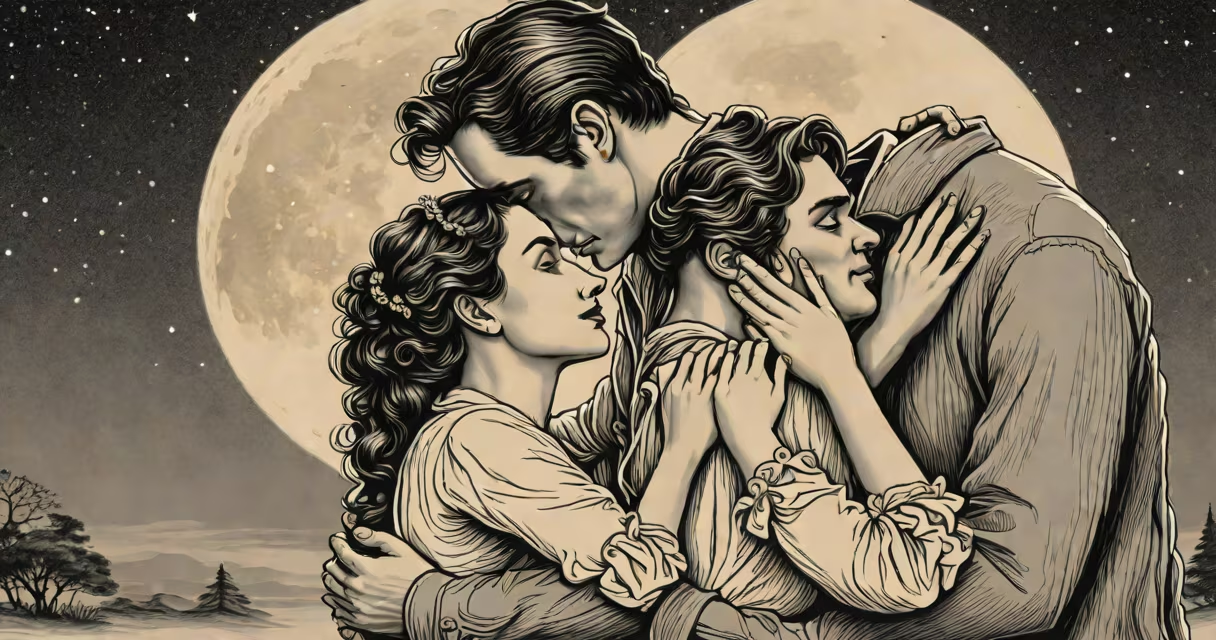
The phrase "tale as old as time" describes a story so common and enduring that it feels timeless-especially one about love overcoming obstacles through fate, sacrifice, or transformation. It's not meant literally; it signals a narrative structure repeated across cultures and centuries.
This expression functions as a shorthand for archetypal romance: two people meet despite differences in status, appearance, or origin, and their bond grows stronger through hardship. The phrase appears most famously in Disney's 1991 animated film *Beauty and the Beast*, where it introduces the song "Tale as Old as Time." Its use in that context underscores how deeply embedded such stories are in collective memory.
According to the Library of Congress, the motif of love conquering difference-often involving a prince cursed into beast form-is documented in European folklore dating back to the 14th century. The tale's persistence shows that audiences recognize it not as fiction, but as a reflection of human desire for connection beyond circumstance.
"Tale as old as time" operates as a narrative cue. When someone says it, they're signaling that what follows is familiar-part of a shared cultural language. It sets expectations: characters will face trials, emotions will deepen, and resolution will come through emotional authenticity rather than logic or power.
In literature and film, this setup often begins with a mismatched pairing-such as a noblewoman and a monster, a peasant and a prince, or a mortal and a god. The tension arises not from conflict between good and evil, but from societal or supernatural barriers. Over time, the relationship becomes the central focus, and the audience invests emotionally because the story feels inevitable.
A real-world example: the 2017 live-action remake of *Beauty and the Beast* opens with the song using the phrase. The lyrics describe Belle's growing affection for the Beast despite his appearance, reinforcing the idea that true love transcends surface-level judgment. This version retains the original's core message: love is not about perfection, but about seeing and accepting another person's inner self.
Stories labeled "tale as old as time" share structural features. They rely on four recurring components:
These elements appear across genres. In fantasy, *The Lord of the Rings* contains echoes: Aragorn and Arwen's romance spans decades and involves exile, prophecy, and death. In modern cinema, *The Notebook* uses the same arc-two people from different backgrounds reunite after years apart, surviving loss and misunderstanding.
Not all versions are happy. Some twist the trope to critique it. For example, *Pride and Prejudice* subverts the idea: Elizabeth Bennet resists Mr. Darcy not because she doesn't care, but because she sees his flaws. Their love develops slowly, based on mutual respect-not instant recognition. This variation shows that "tale as old as time" can be both celebrated and questioned.
Many assume "tale as old as time" means something ancient or historically accurate. That's incorrect. The phrase isn't about chronology-it's about cultural repetition. A story can be new and still feel "old as time" if it uses the same emotional blueprint.
Another mistake: thinking the phrase implies inevitability. In reality, it highlights choice. The beauty of the trope lies in the decision to love despite risk. In *Beauty and the Beast*, Belle chooses to stay with the Beast even after he threatens her. Her action isn't automatic-it's deliberate. This moment separates the story from mere destiny.
A lesser-known fact: the phrase predates Disney. It appears in 18th-century French literature, including works by Madame de La Fayette. In *La Princesse de Clèves*, a woman rejects a man she loves because society forbids it-yet the narrator calls her sorrow "a tale as old as time." This usage shows the concept existed long before animation.
"Tale as old as time" persists because it taps into universal human experiences: longing, fear of rejection, the hope that love can overcome anything. According to the American Psychological Association, romantic narratives influence how people view relationships-even shaping expectations in adolescence and early adulthood.
It's used in advertising, music, and social media to evoke nostalgia or emotional weight. A 2022 study in *Journal of Consumer Research* found that ads referencing "timeless love" increased purchase intent by 18% compared to neutral messaging. The effect stems from the phrase's ability to bypass logic and speak directly to emotion.
For example, a wedding planner might describe a couple's story as "a tale as old as time" to emphasize continuity and legacy. A singer might use the phrase in a lyric to suggest devotion beyond mortality. These applications show the phrase isn't limited to fiction-it's part of how we narrate our lives.
Understanding the phrase requires distinguishing it from similar concepts. Below is a comparison of related narrative structures:
| Trope | Core idea | Key difference from "tale as old as time" |
|---|---|---|
| Love at first sight | Instant attraction based on appearance | Focuses on immediate recognition, not enduring commitment. Often criticized as unrealistic. |
| Enemies to lovers | Hostility turns to affection over time | Emphasizes transformation through conflict. Less about fate, more about personal growth. |
| All-time low | Emotional or situational despair | Represents failure or decline. Opposite of enduring love; a downward spiral rather than a lasting bond. |
While "tale as old as time" shares roots with these, it stands out for its emphasis on patience, endurance, and mutual change. It's not about the beginning or the crash-it's about what happens in between.
I once attended a community theater production of *Beauty and the Beast*. During the performance of "Tale as Old as Time," the audience fell silent. Not because of the music-but because the lyrics landed differently when sung by a young actor who had never seen the movie. He didn't know the phrase was iconic. He just sang it like it was true. That moment reminded me: the power of the phrase isn't in its fame-it's in its believability.
"Tale as old as time meaning" points to a deep current in storytelling-one that values emotional truth over novelty. It's not about how old a story is, but how well it mirrors the human experience of choosing love anyway. Whether in a fairy tale, a film, or a real-life relationship, the phrase remains relevant because it names something real: the courage to believe in connection across time, space, and difference.