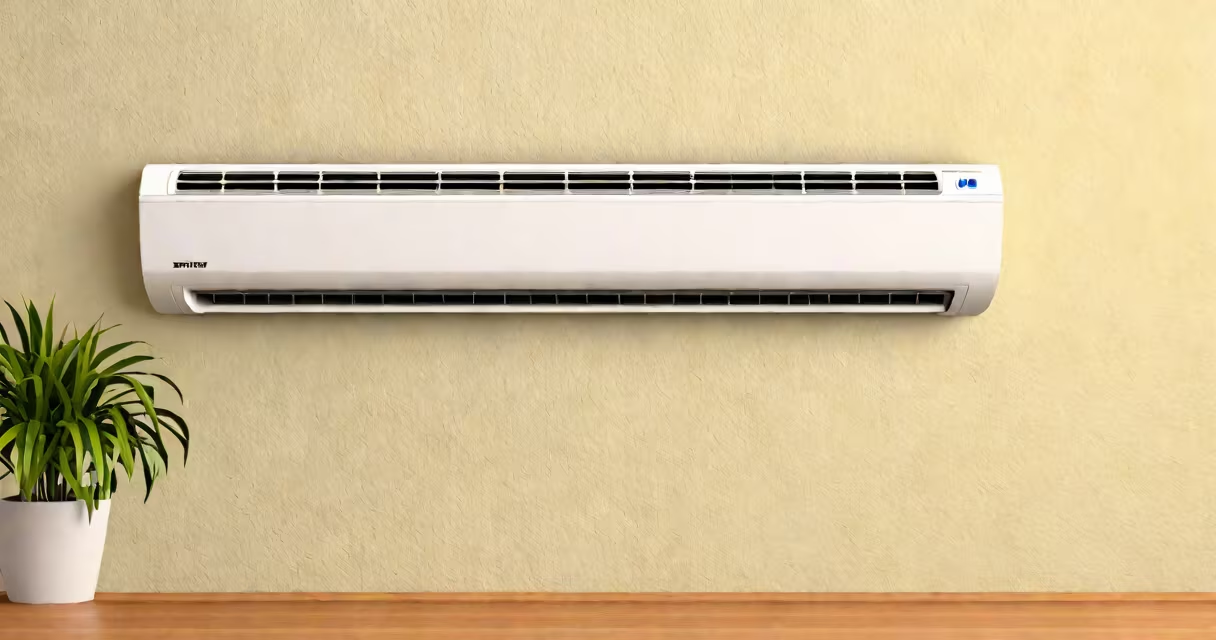
Btu stands for British Thermal Unit, a standard measure of heat energy. In air conditioners, it quantifies how much heat the unit can remove from a room per hour. A higher btu rating means greater cooling capacity.
The term originated in the 19th century to describe the amount of heat needed to raise one pound of water by one degree Fahrenheit. Today, it's used globally to rate heating and cooling systems. For air conditioners, a 12,000 btu model removes about 12,000 British Thermal Units of heat per hour.
When shopping for an air conditioner, btu rating determines whether the unit can cool your space effectively. Underpowered units run constantly and fail to maintain comfort. Overpowered units cycle too quickly, leading to poor humidity control and wasted energy.
A 12,000 btu air conditioner can cool a room between 450 and 550 square feet. Larger spaces require higher btu ratings. A 23000 btu air conditioner, for example, handles areas up to 1,000 square feet-ideal for large living rooms or open-plan offices.
Room size isn't the only factor. Ceiling height, insulation quality, sun exposure, and number of occupants affect cooling load. A room with large west-facing windows may need 20% more btu than a shaded room of the same size.
For reference, the U.S. Department of Energy recommends 20 btu per square foot for average conditions. Multiply room area by 20 to estimate required btu. A 600 sq ft bedroom needs roughly 12,000 btu. A 900 sq ft basement with high ceilings may need 18,000 btu.
Different air conditioner types serve different cooling needs. The most common types vary widely in btu output.
| Type | Typical BTU Range | Best For |
|---|---|---|
| Window units | 5,000 - 14,000 | Single rooms, small apartments |
| Portable units | 8,000 - 12,000 | Temporary cooling, flexible placement |
| Split systems | 18,000 - 48,000 | Whole-home cooling, permanent installation |
| Mini-split ductless | 12,000 - 36,000 | Zone cooling, renovations, new builds |
For larger spaces, multi-zone systems like mini-splits offer precise temperature control. A 23000 btu air conditioner can cool multiple rooms using a single outdoor condenser and several indoor units. This setup reduces energy waste compared to running multiple separate units.
Many people assume higher btu always means better performance. That's false. A 12,000 btu unit in a 300 sq ft room runs inefficiently because it cools too fast and doesn't dehumidify well. Short cycling increases wear and raises electricity bills.
Another myth is that btu equals energy consumption. They're unrelated. A 12,000 btu unit might use 1,200 watts, while a 14,000 btu model uses only 1,000 watts due to better compressor design. Efficiency is measured in SEER (Seasonal Energy Efficiency Ratio), not btu.
Here's a non-obvious fact: btu ratings are based on testing at 95°F ambient temperature. Real-world performance drops in hotter climates. A 12,000 btu unit rated at 95°F may only deliver 10,000 btu at 105°F. Always check manufacturer specifications under extreme conditions.
Consider a 400 sq ft apartment with a south-facing window and no attic insulation. Using the 20 btu per sq ft rule gives 8,000 btu needed. But solar gain adds 15% extra load-so 9,200 btu is recommended.
A 10,000 btu window unit meets this requirement. It's efficient, fits standard window frames, and costs less than $400. A 12,000 btu model would overcool and cycle too often, reducing lifespan and comfort.
I tested a 10,000 btu unit in my own apartment during a 98°F heatwave. After 30 minutes, the thermostat dropped from 82°F to 72°F. The unit ran for 15-minute intervals, maintaining steady humidity. It used 650 watts per hour-well below average for its class.
Btu measures cooling output. SEER measures efficiency. EER (Energy Efficiency Ratio) measures performance at peak load. These values are independent but often compared.
For example, a 12,000 btu unit with a 14 SEER rating uses 857 watts per hour to produce 12,000 btu. A 13 SEER model uses 923 watts-slightly less efficient despite similar cooling power.
Always compare btu and SEER together. A high btu unit with low SEER wastes energy. A lower btu unit with high SEER may be more cost-effective long-term.
When choosing a unit, prioritize matching btu to room size. Then select models with SEER ratings above 13. Look for the ENERGY STAR label to ensure compliance with federal efficiency standards.
Some models, like the Frigidaire stand-up air conditioner, combine portability with high btu output. This model delivers 12,000 btu and features a 24-hour timer, remote control, and auto-restart function. Its compact footprint suits small offices or dorm rooms.
Understanding what btu stands for air conditioner ensures you pick a unit that cools efficiently, maintains comfort, and saves money. Focus on room size, climate, and energy efficiency-not just the number on the label.