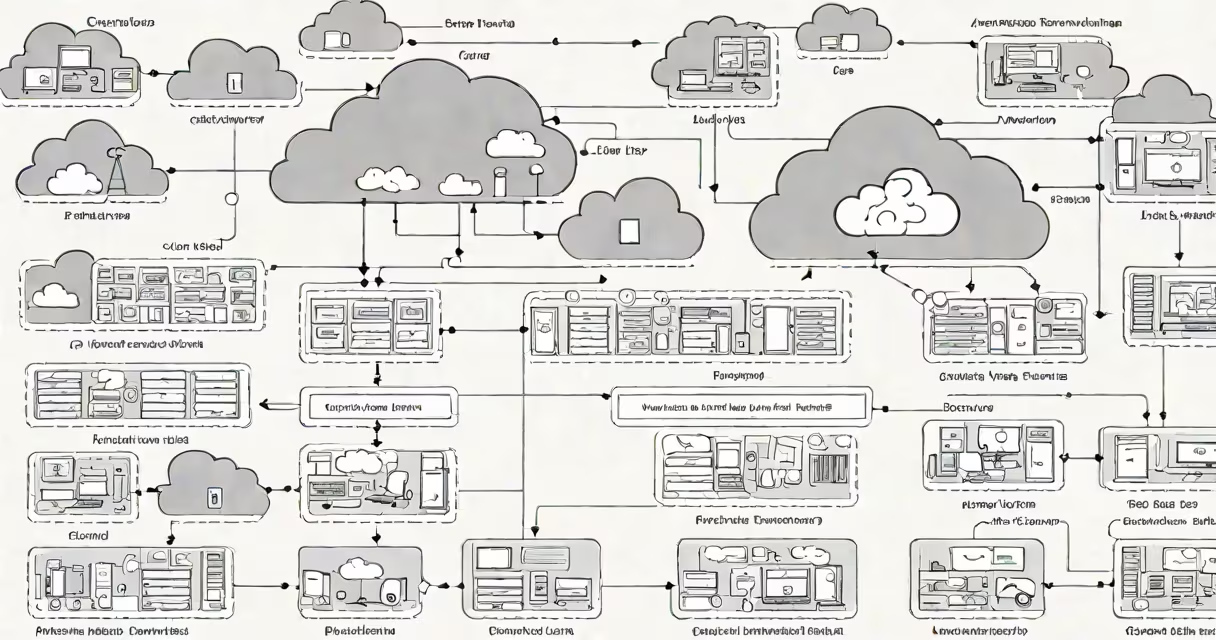
Cloud platform as a service (PaaS) is a cloud computing model that provides a managed environment for developing, testing, deploying, and hosting applications. It eliminates the need to provision and maintain physical servers, storage, or networking hardware. Developers focus on writing code while the provider handles infrastructure scaling, patching, and availability.
PaaS sits between Infrastructure as a Service (IaaS) and Software as a Service (SaaS). While IaaS gives you raw compute and storage, and SaaS delivers ready-to-use software, PaaS offers a middle ground: a complete runtime environment with databases, middleware, and development tools already configured. You don't install anything. You just deploy your app.
Major providers like AWS Elastic Beanstalk, Microsoft Azure App Services, and Google App Engine offer PaaS solutions. These platforms automatically scale based on traffic, apply security updates, and integrate with monitoring and logging systems. They're designed for teams that want speed, consistency, and reduced DevOps burden.
When you use a PaaS, you upload your application code-typically in languages like Python, Node.js, Java, or Go-and the platform runs it in a containerized or virtualized environment. The system manages load balancing, auto-scaling, backups, and access controls behind the scenes.
For example, deploying a web app on Heroku requires only a Git push. The platform detects the language, installs dependencies, starts the server, and exposes the app via a public URL. No configuration files for servers or network settings are needed. The entire process takes under five minutes.
Behind the scenes, PaaS providers use orchestration tools like Kubernetes or Docker Swarm to manage containers. They also integrate with CI/CD pipelines, allowing automated builds and rollbacks. This enables rapid iteration-teams can release new features multiple times a day without downtime.
PaaS varies by level of abstraction and control. Some platforms give you full access to the OS and runtime; others lock down configurations for security and compliance.
| Type | Control Level | Use Case | Example |
|---|---|---|---|
| Full-stack PaaS | High | Startups, rapid prototyping | Heroku, Firebase |
| Customizable PaaS | Medium | Enterprise apps, regulated industries | AWS Elastic Beanstalk, Azure App Services |
| Open-source PaaS | Low | Teams needing portability, avoiding vendor lock-in | OpenShift, Cloud Foundry |
Open-source options like OpenShift allow deployment on private clouds or hybrid environments. They support custom buildpacks and integration with internal authentication systems. This flexibility suits organizations with strict data governance policies.
Developers choose cloud platform as a service to accelerate delivery cycles. A 2023 report from Gartner found that teams using PaaS reduced average deployment time from 4.2 days to 1.8 hours. This speed comes from pre-built toolchains and automated workflows.
Enterprises use PaaS to standardize environments across departments. Instead of each team setting up their own servers, they all run on the same platform. This reduces configuration drift, improves security compliance, and simplifies audits.
For example, a healthcare company deployed a patient portal using Microsoft Azure App Services. The platform handled SSL termination, DDoS protection, and automatic scaling during peak usage. The team spent less than 10% of their time on infrastructure tasks and focused on adding clinical features.
Many assume PaaS is synonymous with "managed hosting." That's incorrect. Managed hosting still requires you to manage the operating system, firewalls, and backup schedules. PaaS goes further-it manages the runtime, database, and even the deployment pipeline.
Another myth is that PaaS limits innovation. In reality, platforms like Google Cloud Run let you run serverless functions with custom Docker images. You can use any structure, including React, Django, or Spring Boot. The platform doesn't restrict your tech stack.
A key distinction: PaaS is not a replacement for IaaS. If you need fine-grained control over CPU allocation, network topology, or disk encryption, IaaS remains better. But for most application workloads, PaaS reduces complexity without sacrificing performance.
In 2022, a fintech startup launched a mobile banking app using AWS Elastic Beanstalk. They wrote the backend in Node.js and stored user data in Amazon RDS. After pushing code to GitHub, Elastic Beanstalk automatically:
The app was live within 6 minutes. Over the next month, traffic spiked during market hours. The platform scaled from one instance to eight without manual intervention. No downtime occurred.
This scenario illustrates how cloud platform as a service removes operational friction. The engineering team didn't touch servers. They only monitored logs and responded to errors through alerts.
Understanding what cloud platform as a service is requires knowing what it's not.
| Model | What You Manage | Best For |
|---|---|---|
| IaaS | OS, runtime, applications | Custom software, legacy migrations |
| PaaS | Applications, data | New app development, agile teams |
| SaaS | Nothing (just users) | End-user tools like email, CRM |
For instance, using a SaaS tool like Slack doesn't involve coding. Using IaaS means running a VM and installing a web server manually. With PaaS, you write code and deploy it-nothing else.
I once helped migrate a university's course registration system from on-premise servers to Google App Engine. The original setup required two sysadmins to maintain 12 virtual machines. After migration, the team reduced staffing to one developer and one part-time operations person. The system handled 15,000 concurrent sign-ups during enrollment season with zero crashes. The PaaS handled scaling, backups, and error recovery-all without human input.
This shift wasn't just about cost savings. It freed engineers to focus on improving student experience rather than rebooting servers.
Cloud platform as a service streamlines application development by removing infrastructure complexity. It's ideal for teams building web apps, APIs, microservices, or data processing pipelines. By automating provisioning, scaling, and maintenance, it lets developers ship faster and operate more reliably.
Understanding what is cloud platform as a service clarifies how it fits into modern software delivery. It's not a buzzword-it's a practical layer that makes building software faster, safer, and more predictable.