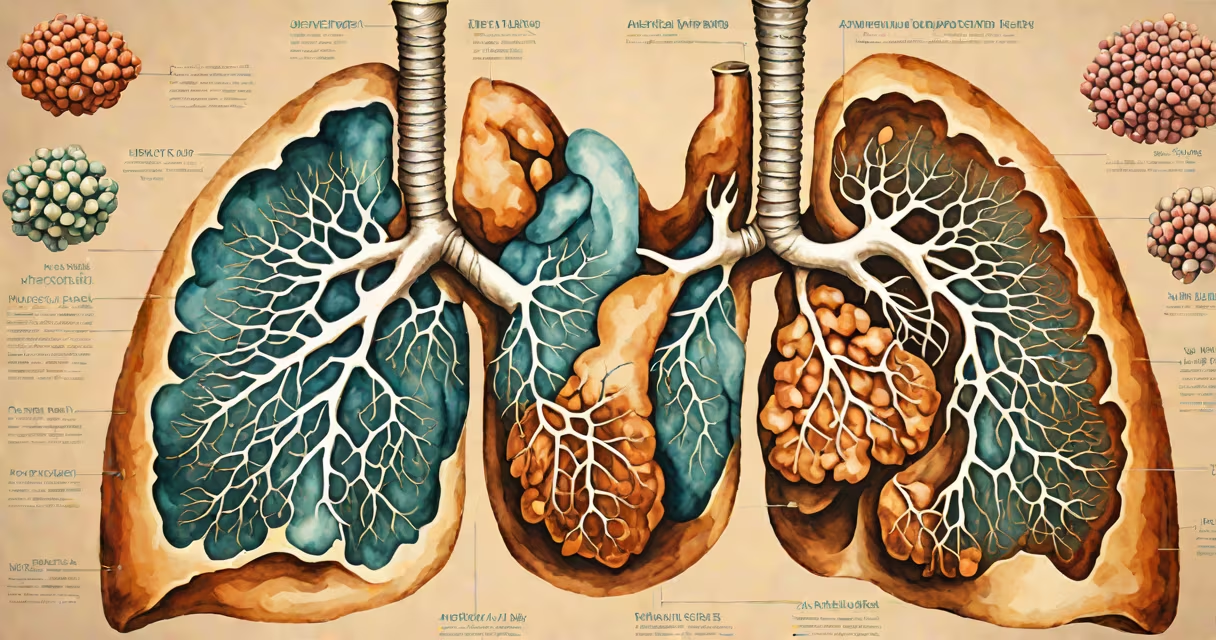
The term "respiratory" describes anything related to breathing, the process of taking in oxygen and expelling carbon dioxide through the lungs and airways. It applies to the organs involved, physiological processes, and medical conditions affecting breathing.
Respiratory functions begin when air enters through the nose or mouth, travels down the trachea, branches into bronchi, and reaches tiny air sacs called alveoli in the lungs. Oxygen diffuses into the bloodstream, while carbon dioxide moves out to be exhaled. This exchange happens in the pulmonary capillaries surrounding the alveoli.
Medical professionals use "respiratory" to describe diseases such as asthma, chronic obstructive pulmonary disease (COPD), pneumonia, and tuberculosis. The term also appears in diagnostic tools like spirometry, which measures how much air a person can inhale and exhale, and how quickly.
Respiration occurs in two phases: external and internal. External respiration takes place in the lungs, where oxygen from inhaled air crosses into the blood, and carbon dioxide leaves the blood to be exhaled. Internal respiration happens at the cellular level, where oxygen is used to produce energy via aerobic metabolism, and carbon dioxide is generated as waste.
The diaphragm, a dome-shaped muscle beneath the lungs, contracts and flattens during inhalation, increasing chest cavity volume and drawing air in. During exhalation, the diaphragm relaxes, reducing space and pushing air out. This mechanical action is coordinated by the brainstem's respiratory center, which monitors blood gas levels and adjusts breathing rate accordingly.
A healthy adult breathes about 12 to 20 times per minute at rest. During exercise, breathing increases to meet higher oxygen demands. For example, a runner may breathe 40 times per minute during a sprint, driven by rising carbon dioxide levels detected by chemoreceptors in the brainstem.
Respiratory issues fall into categories based on location and cause. The table below outlines common conditions and their defining features:
| Type | Description | Example |
|---|---|---|
| Obstructive | Blocked airflow due to narrowed airways | Asthma, COPD |
| Restrictive | Limited lung expansion | Pulmonary fibrosis, neuromuscular disorders |
| Infectious | Bacteria, viruses, or fungi invade lung tissue | Pneumonia, tuberculosis |
| Neoplastic | Tumors affect airways or lung tissue | Lung cancer, carcinoid tumors |
Some terms are often confused. For example, "respiratory" is not synonymous with "cardiovascular," though both systems support oxygen delivery. The heart pumps oxygenated blood, while the lungs supply it. A patient with heart failure may develop pulmonary edema-a fluid buildup in the lungs-leading to respiratory distress, but the root issue lies in cardiac function.
Another common error: equating "respiratory" with "respiratory infection." While infections like bronchitis or pneumonia involve the respiratory tract, not all respiratory symptoms stem from infection. Allergies, acid reflux, and anxiety can mimic respiratory illness, leading to misdiagnosis if not properly evaluated.
Consider a 65-year-old smoker diagnosed with emphysema, a form of COPD. His doctor notes reduced forced expiratory volume in one second (FEV1) on a spirometry test-below 80% of predicted values. This indicates obstructive respiratory disease. He experiences shortness of breath climbing stairs, a sign of impaired gas exchange.
Another example: a child with seasonal allergies develops wheezing and coughing. These are respiratory symptoms caused by inflammation in the airways, not infection. Treatment includes antihistamines and inhaled corticosteroids to reduce swelling and open air passages.
Even in fitness, respiratory meaning matters. A runner training for a marathon improves lung capacity through interval training. Over time, their tidal volume (air moved per breath) increases from 500 mL to 700 mL, and resting respiratory rate drops from 16 to 12 breaths per minute-indicating greater efficiency.
Many assume that "respiratory" always implies illness. But the term applies to normal, healthy function too. Breathing during sleep, speaking, singing-all rely on respiratory mechanics. Even yawning is a respiratory reflex designed to increase oxygen intake and release carbon dioxide.
Another misconception: that respiratory problems only affect the lungs. In reality, systemic conditions impact breathing. Sepsis, for example, triggers acute respiratory distress syndrome (ARDS) due to widespread inflammation in the lungs. This condition affects over 190,000 people annually in the U.S., according to the National Heart, Lung, and Blood Institute (NHLBI).
Also, "respiratory" does not mean "lung." The respiratory system includes the nose, pharynx, larynx, trachea, bronchi, bronchioles, alveoli, and pleura. The diaphragm and intercostal muscles are part of the respiratory apparatus even though they're skeletal muscles. They enable movement, not gas exchange-but without them, breathing cannot occur.
I once observed a patient in a clinic who reported fatigue and dizziness. Initial tests showed low oxygen saturation. Further evaluation revealed undiagnosed sleep apnea-a condition where breathing repeatedly stops during sleep. The patient's respiratory system failed during rest, leading to hypoxia. After using a CPAP machine, his oxygen levels normalized, and energy returned within weeks. This case shows how respiratory dysfunction can manifest as systemic symptoms.
"Respiratory" appears in compound terms like "respiratory therapist," a healthcare professional trained to assess and treat breathing disorders. They work in hospitals, clinics, and home care settings, using equipment like ventilators and nebulizers.
It also appears in scientific contexts: "respiratory quotient" (RQ) measures the ratio of CO₂ produced to O₂ consumed during metabolism. An RQ of 1.0 indicates carbohydrate oxidation; 0.7 suggests fat metabolism. This metric helps clinicians estimate metabolic rate during stress or illness.
For clarity, "respiratory" is distinct from "circulatory," "digestive," or "nervous." Though all systems interact, each has a primary function. The nervous system controls breathing rate via signals from the medulla oblongata. The circulatory system transports gases. The respiratory system exchanges them.
Understanding the meaning of respiratory helps interpret medical reports, recognize symptoms, and make informed health choices. Whether discussing a diagnosis, evaluating fitness, or managing a chronic condition, knowing how breathing works is essential.
When you hear "respiratory," think of air moving in and out, oxygen entering the blood, and carbon dioxide being removed. It's not just about lungs-it's about survival, performance, and everyday function.