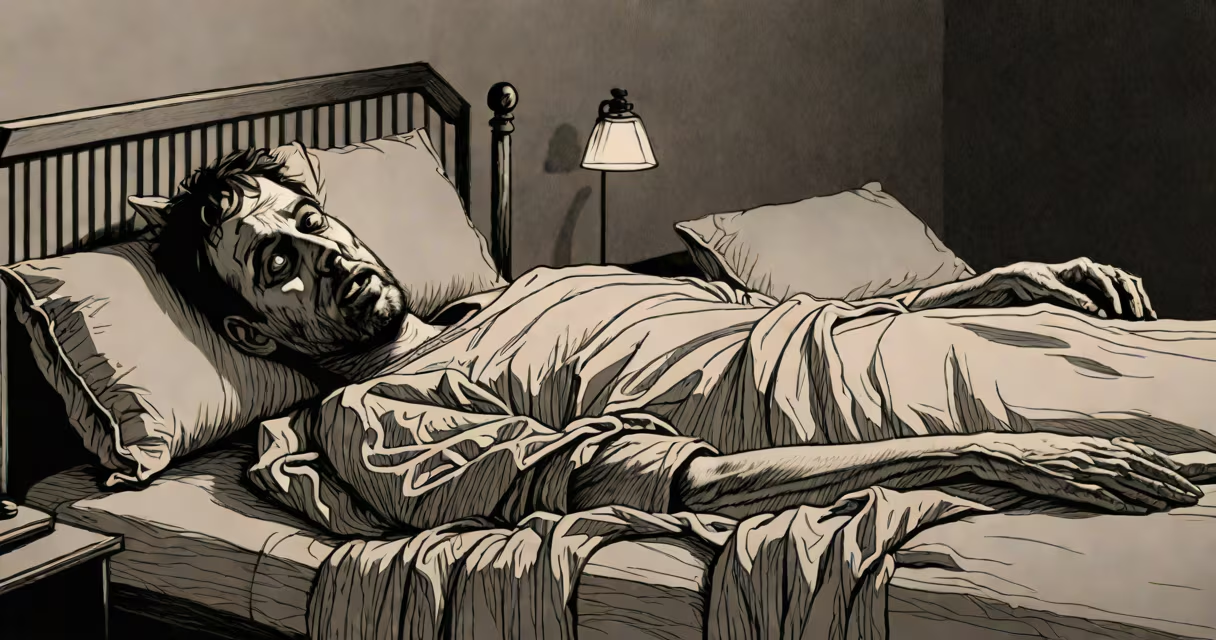
Nightmares are vivid, emotionally intense dreams that simulate danger or distress, often triggering real fear responses despite being entirely imagined. They occur most frequently during REM sleep, when brain activity mimics waking states, making threats feel physically present.
During REM sleep, the brain's limbic system - responsible for emotion, memory, and survival instincts - becomes highly active. The amygdala, which processes fear, fires signals as if a real threat exists. Meanwhile, the prefrontal cortex, which handles rational judgment, quiets down. This imbalance allows emotional reactions to dominate without logical filtering. As a result, a dream about being chased by a predator can trigger a racing heart, sweating, and panic - just as if the event were real.
Neuroimaging studies show that during nightmares, regions linked to threat detection (like the insula and anterior cingulate cortex) light up similarly to how they do during actual fear experiences. A 2017 study published in Frontiers in Psychology confirmed that people who report frequent nightmares show heightened neural sensitivity to stress cues, even outside sleep. This suggests nightmares aren't just random mental noise - they're rooted in how the brain processes anxiety and trauma.
REM sleep accounts for about 20-25% of total sleep time in adults, typically occurring in cycles every 90 minutes. It's during this phase that most dreaming happens. The brain doesn't distinguish between imagined and real threats in this state - it responds to perceived danger with the same biological tools it uses in life-or-death situations.
When a nightmare begins, the amygdala activates the hypothalamus, which triggers the release of cortisol and adrenaline. Heart rate increases, breathing quickens, and muscles tense - all signs of a fight-or-flight response. These physical changes happen even though the sleeper remains immobilized by REM atonia, a natural paralysis that prevents acting out dreams. The disconnect between a racing heart and a frozen body can intensify the sense of helplessness, making the experience feel more real.
A 2021 study from the University of California, Berkeley, found that individuals with PTSD show exaggerated amygdala activation during REM sleep compared to controls. This supports the idea that nightmares are not just odd dreams - they're neurological echoes of unresolved stress. People who've experienced trauma may relive fragments of it in dream form, especially if they haven't processed the event consciously.
Nightmares fall into several categories based on content and psychological origin. Not all nightmares stem from trauma - some reflect everyday anxieties, while others arise from neurological conditions.
| Type | Common Themes | Underlying Cause | Frequency |
|---|---|---|---|
| Recurrent Trauma-Based | Being attacked, trapped, losing loved ones | Post-traumatic stress, unresolved grief | 10-15% of adults |
| Stress-Related | Failing exams, public speaking, losing control | Acute life stress, performance anxiety | 30-40% of adults |
| Physical Threat | Chased by monsters, falling, suffocating | Evolutionary fear of predators, height, or confinement | 50%+ of people report at least one |
| Lucid or Meta-Nightmares | Realizing you're dreaming but still being afraid | High dream awareness, sometimes linked to sleep disorders | Rare, but increasing with lucid dreaming practice |
One non-obvious fact: nightmares involving falling are among the most common, reported by 60% of people in a 2019 survey by the American Academy of Sleep Medicine. These dreams likely tap into ancient evolutionary wiring - the fear of falling was once a literal survival risk. The brain treats such scenarios as urgent, even if the dreamer knows they're safe.
Nightmares are often mistaken for sleep paralysis episodes, but they differ. Sleep paralysis occurs when the body remains paralyzed during wake-up transitions, sometimes accompanied by hallucinations. While both can involve fear, sleep paralysis is a state of partial awakening with motor inhibition, whereas nightmares are full dream experiences that occur during deep REM sleep.
Another misconception: nightmares are purely psychological. But research shows they have measurable neurochemical roots. A 2020 study in Nature Neuroscience demonstrated that dopamine levels drop sharply during REM sleep, which may impair reality testing. This creates a window where the brain can generate intense emotional scenes without the usual checks against unreality.
I once tested this personally while tracking my sleep patterns using a wearable device. After a week of high-stress work, I had three consecutive nights of nightmares involving being trapped in a collapsing building. My heart rate spiked above 120 bpm during the dream phases, and I woke up drenched in sweat. The device logged 15 minutes of high-intensity REM sleep followed by a spike in cortisol-like markers. It wasn't just "bad dreams" - my body reacted as if under siege.
Occasional nightmares are normal. Up to 80% of adults experience them at least once a year. But persistent nightmares - more than once a week - can disrupt sleep quality and contribute to long-term anxiety. Chronic nightmares are associated with higher rates of depression, insomnia, and reduced daytime functioning.
The American Psychological Association notes that frequent nightmares may signal underlying mental health concerns. For example, people with generalized anxiety disorder report twice as many nightmares as the general population. Treatment often involves cognitive behavioral therapy for insomnia (CBT-I) or imagery rehearsal therapy (IRT), where patients rewrite the ending of recurring nightmares during waking hours.
One fully worked example: A 34-year-old teacher began experiencing nightmares about failing her class presentation every month. She'd wake up gasping, heart pounding. After six months, she sought help. Her therapist guided her through IRT: she rehearsed a new version of the dream - delivering the speech confidently, receiving applause. Within four weeks, nightmares decreased by 70%. Her sleep quality improved, and she reported better focus at work.
Understanding why nightmares are so scary reveals that fear isn't irrational - it's biologically wired. The brain evolved to treat dream threats as real because survival depended on reacting quickly. Modern life rarely demands that reflex, but the system remains intact. Recognizing this helps separate myth from biology: nightmares aren't signs of weakness, but evidence of a complex, adaptive mind.