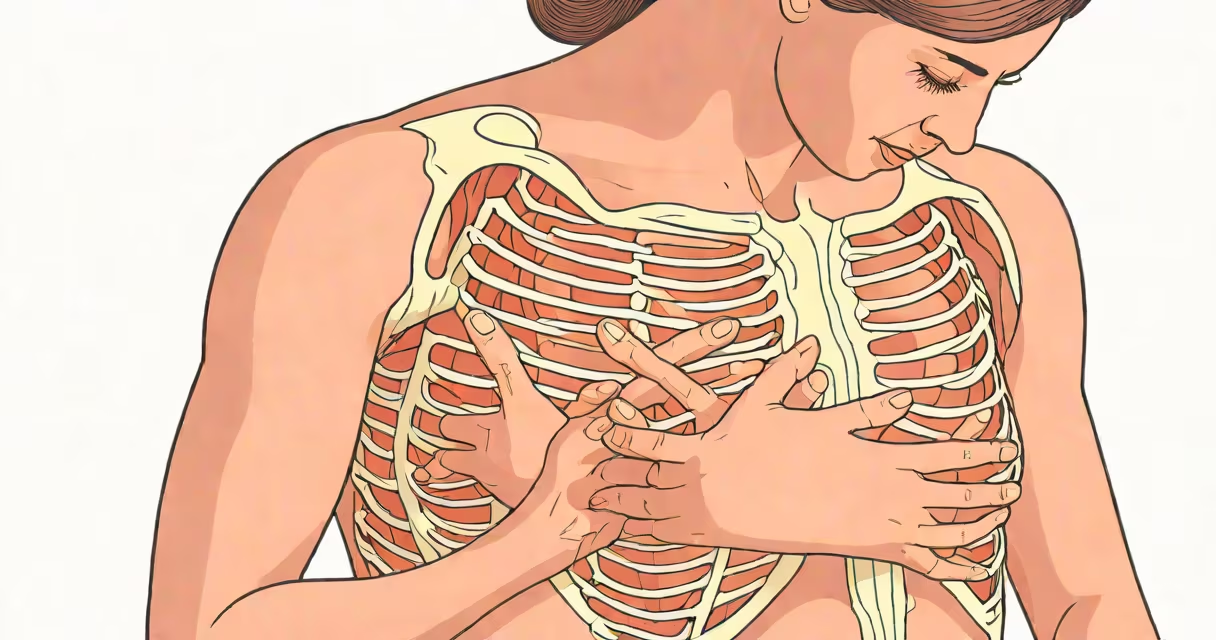
Pain under breast and rib cage arises from structures in the chest wall, lungs, diaphragm, or upper abdomen. It may feel sharp, dull, pressure-like, or burning, depending on the cause. This region includes the lower ribs, sternum, intercostal muscles, and underlying organs such as the liver, stomach, and spleen.
The sensation typically originates from one of several systems: musculoskeletal (bones, cartilage, muscles), pulmonary (lungs, pleura), cardiac (heart, pericardium), gastrointestinal (stomach, esophagus, liver), or neurological (nerves). Accurate diagnosis requires distinguishing between these origins based on symptom pattern, timing, and triggers.
According to the American College of Rheumatology, musculoskeletal conditions account for nearly 60% of non-traumatic chest pain cases seen in primary care. The most frequent culprits include costochondritis, muscle strain, and nerve irritation. These are usually benign but can mimic heart-related pain.
When pain emerges under the breast and rib cage, it begins with a stimulus-mechanical stress, inflammation, or organ distension-that activates nociceptors (pain receptors) in the tissues. Signals travel via spinal nerves to the brain, where they're interpreted as localized discomfort.
For example, costochondritis involves inflammation of the cartilage connecting the ribs to the sternum. This condition often flares after repetitive motion, heavy lifting, or viral infection. Pain intensifies with deep breathing, coughing, or pressing on the affected joint. A 2021 study in Journal of Clinical Rheumatology found that 73% of patients with costochondritis reported tenderness at the second to fifth costochondral junctions.
Gastrointestinal causes like acid reflux or hiatal hernia produce burning pain that worsens when lying down or bending forward. The lower esophageal sphincter fails to close properly, allowing stomach acid to irritate the esophagus near the diaphragm. This pain can radiate upward into the chest and mimic cardiac symptoms.
Understanding the root cause requires categorizing pain by system. Below are the major categories, their typical features, and diagnostic clues.
| Type | Common Causes | Key Characteristics | Diagnostic Clue |
|---|---|---|---|
| Musculoskeletal | Costochondritis, muscle strain, rib fracture | Sharp, localized, worsens with movement or pressure | Tenderness on palpation; reproducible with arm motion |
| Pulmonary | Pleurisy, pneumonia, pulmonary embolism | Dull or sharp; worsens with deep breaths or coughing | Respiratory rate increase; abnormal lung sounds on exam |
| Gastrointestinal | GERD, hiatal hernia, gastritis | Burning, pressure-like; improves with antacids | Worse after eating; associated with bloating or belching |
| Cardiac | Angina, pericarditis | Crushing, tight; may radiate to jaw or arm | Often triggered by exertion; relieved by rest or nitroglycerin |
One non-obvious distinction: pleuritic pain (from lung lining irritation) often shifts with position. Lying on the painful side may reduce discomfort due to reduced lung expansion. This is less common with musculoskeletal pain, which remains stable regardless of posture.
I once evaluated a 42-year-old woman who described a stabbing pain under her left breast that worsened when she took a deep breath. She had no history of heart disease. On physical exam, the pain was reproducible when I pressed over the fifth rib. After ruling out pneumonia and cardiac issues with an EKG and chest X-ray, she was diagnosed with costochondritis. Her symptoms resolved within four weeks with NSAIDs and activity modification.
Location matters. Pain beneath the right breast and rib cage often points to liver, gallbladder, or right-sided lung issues. The right upper quadrant houses the liver, gallbladder, and part of the colon. Conditions like cholecystitis or hepatitis can refer pain to this area.
Left-sided pain under the breast and rib cage is more likely to stem from gastric or splenic involvement. The spleen lies under the left eleventh and twelfth ribs. Splenic rupture-rare but serious-can cause referred pain to the left shoulder and lower left rib cage.
According to the National Institute of Diabetes and Digestive and Kidney Diseases, acid reflux affects about 20% of U.S. adults monthly. When the lower esophageal sphincter relaxes abnormally, acid backs up into the esophagus, causing a burning sensation behind the breastbone. This pain may rise toward the neck or jaw and is often worse at night or after meals.
Another overlooked cause: nerve entrapment. Intercostal neuralgia occurs when a rib nerve becomes compressed or inflamed. It presents as a sharp, shooting pain along the rib line, sometimes mimicking a heart attack. Diagnosis often requires clinical correlation and imaging.
Many people mistake pain under breast and rib cage for heart attacks. However, cardiac pain rarely presents in isolation. True angina typically involves pressure, heaviness, or tightness in the center of the chest, often spreading to the left arm, neck, or jaw. It's usually triggered by exertion and relieved by rest.
Acid reflux is frequently misdiagnosed as musculoskeletal pain. Patients report a burning sensation that feels like a pulled muscle. But unlike muscle strain, reflux pain responds to antacids and worsens with recumbency. A 2020 review in Alimentary Pharmacology & Therapeutics found that 35% of patients with unexplained chest pain had undiagnosed GERD.
Also, people often assume any rib pain is a fracture. Rib fractures occur after trauma-falling, car accidents, or severe coughing. But isolated rib pain without injury is far more likely due to soft tissue inflammation or nerve irritation.
Seek immediate care if pain is sudden, crushing, or accompanied by shortness of breath, sweating, nausea, or dizziness. These signs suggest a possible heart attack or pulmonary embolism.
Consult a provider if pain persists beyond a week, worsens with activity, or interferes with sleep. Imaging or blood tests may be needed to rule out structural problems.
Remember: pain under breast and rib cage is rarely life-threatening when isolated and non-traumatic. Most cases resolve with conservative management. But accurate identification prevents unnecessary testing and ensures timely treatment when needed.