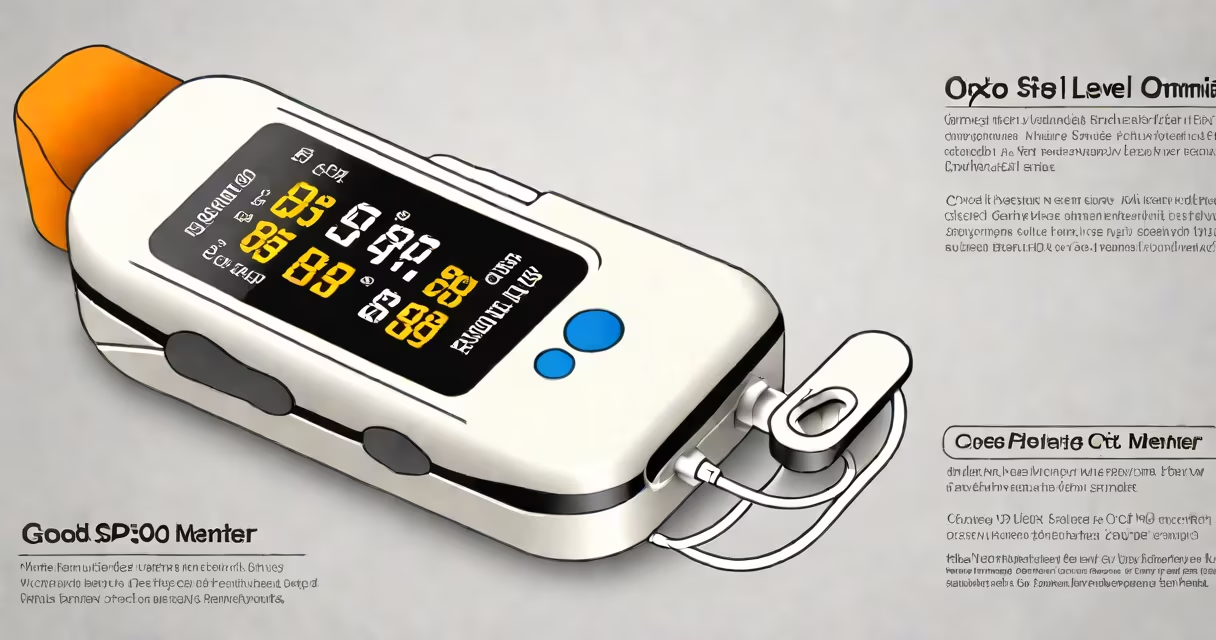
A good spo2 level is between 95% and 100% in healthy adults breathing room air. This measurement indicates how efficiently hemoglobin in red blood cells transports oxygen from the lungs to tissues throughout the body.
SpO2, short for peripheral capillary oxygen saturation, is measured non-invasively using a pulse oximeter. The device clips onto a finger, toe, or earlobe and uses light absorption to estimate arterial oxygen saturation. A reading below 90% signals hypoxemia, a condition requiring medical evaluation.
For most people, a stable SpO2 above 95% correlates with adequate oxygen delivery to important organs. Values consistently below 92% may indicate respiratory or cardiovascular compromise. The American Thoracic Society notes that sustained SpO2 below 90% increases risk of organ dysfunction, especially in individuals with chronic lung disease.
Pulse oximeters work by emitting two wavelengths of light-red and infrared-through the skin. Oxygenated hemoglobin absorbs more infrared light, while deoxygenated hemoglobin absorbs more red light. The device calculates the ratio and converts it to a percentage.
These devices are widely used in clinical settings and at home. They provide near-instant results and require no blood draw. However, accuracy can be affected by poor circulation, nail polish, motion, or low perfusion states such as shock or hypothermia.
According to the National Institutes of Health, pulse oximetry has a margin of error of ±2% under ideal conditions. In patients with severe anemia or carbon monoxide poisoning, readings may be misleading because carboxyhemoglobin absorbs light similarly to oxyhemoglobin.
Healthy individuals typically maintain SpO2 levels between 95% and 100%. During sleep, levels may dip slightly due to reduced ventilation, but should remain above 90%.
For people with chronic obstructive pulmonary disease (COPD), a target SpO2 of 88% to 92% is often recommended. This range prevents hypercapnia-a dangerous buildup of carbon dioxide-while still providing sufficient oxygenation. Exceeding 92% in COPD patients can suppress the hypoxic drive to breathe.
High-altitude environments reduce atmospheric oxygen. At elevations above 2,500 meters (8,200 feet), SpO2 levels may drop to 85% to 90% even in healthy individuals. Acclimatization improves these values over several days.
| Population | Normal spo2 range | Threshold for concern |
|---|---|---|
| Healthy adult, sea level | 95% - 100% | Below 90% |
| COPD patient, on oxygen therapy | 88% - 92% | Below 88% |
| Infant (0-6 months) | 93% - 100% | Below 90% |
| High altitude (>2,500 m) | 85% - 90% | Below 80% |
Many assume that a SpO2 reading of 100% is always optimal. This is not true. In certain conditions, such as acute respiratory distress syndrome (ARDS), high oxygen levels can cause oxidative damage to lung tissue. Clinicians monitor SpO2 closely to avoid both hypoxia and oxygen toxicity.
Another misconception is that SpO2 reflects health. While it's a useful indicator of respiratory function, it doesn't assess cardiac output, ventilation efficiency, or metabolic demand. A person can have a normal SpO2 but still be in respiratory failure due to poor breathing effort or airway obstruction.
I once used a consumer-grade pulse oximeter during a hiking trip at 3,000 meters elevation. My SpO2 dropped to 89%, which matched my symptoms of dizziness and fatigue. After descending 500 meters and resting, the reading returned to 94%. This confirmed that altitude was affecting oxygen uptake, not a malfunctioning device.
SpO2 levels below 90% warrant prompt evaluation. Persistent readings below 92% during rest or activity suggest impaired gas exchange. Symptoms such as shortness of breath, confusion, chest pain, or cyanosis (bluish tint to lips or nails) increase urgency.
For hospitalized patients, continuous SpO2 monitoring is standard. In intensive care units, levels below 90% trigger interventions like supplemental oxygen, bronchodilators, or mechanical ventilation. The World Health Organization recommends SpO2 monitoring in patients with suspected pneumonia or severe viral infections, including influenza and SARS-CoV-2.
Home users should not rely solely on SpO2 readings. A single low value may result from improper placement or movement. Repeated measurements under consistent conditions are more reliable. If a reading remains below 90% after multiple attempts, contact a healthcare provider.
SpO2 measures oxygen saturation in arterial blood. It differs from PaO2, which is derived from an arterial blood gas test. PaO2 reports actual partial pressure of oxygen in mmHg and provides more precise data for critical care decisions.
While SpO2 is convenient and non-invasive, PaO2 remains the gold standard for diagnosing hypoxemia. For example, a patient with SpO2 of 94% may have a PaO2 of 60 mmHg-indicating moderate hypoxemia. This discrepancy underscores why SpO2 should not replace clinical judgment.
Some devices report "plethysmographic waveform" alongside SpO2. This visual trace shows changes in blood volume with each heartbeat. Abnormal waveforms can reveal arrhythmias, poor perfusion, or signal interference. These details are not visible in raw SpO2 numbers.
For accurate interpretation, consider SpO2 in context. A reading of 96% in a person with pneumonia may be concerning if their baseline is 99%. Conversely, a stable 92% in a COPD patient is acceptable. Always compare to personal baselines and clinical signs.