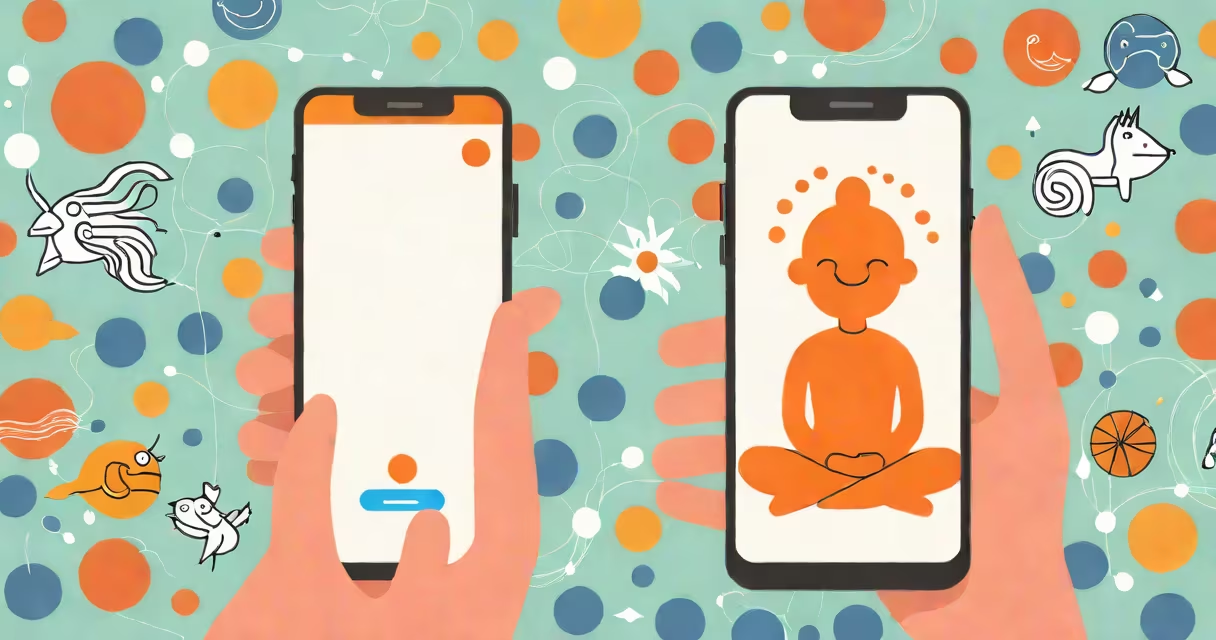
The headspace app offers structured, guided meditation sessions designed to reduce stress, improve focus, and support long-term mental wellness through daily mindfulness practice. It uses short, consistent audio lessons led by trained instructors, often paired with animated visuals and gentle music.
Headspace functions as a digital mindfulness coach. Each session targets specific mental states-like calmness, clarity, or resilience-using techniques rooted in cognitive behavioral therapy and secular mindfulness traditions. The app organizes content into themed packs: sleep, anxiety, focus, relationships, and personal growth. Users complete short daily exercises, typically lasting 3 to 10 minutes, to build mental habits over time.
Research from the University of Oxford and King's College London shows that participants using headspace for eight weeks reported significant reductions in anxiety and improvements in attention span compared to control groups. A 2021 study published in *JMIR Mental Health* confirmed that users experienced measurable decreases in perceived stress after four weeks of consistent use.
Each headspace session follows a predictable format. A narrator begins with a brief introduction to the theme-such as "Letting go of racing thoughts" or "Cultivating kindness." They then guide the user through breathing exercises, body scans, or mindful observation practices. Sessions end with a reflection prompt, encouraging users to notice shifts in mood or awareness.
Visuals play a key role. Animated characters represent mental states-like a blue figure for calm or a red one for stress. These illustrations aren't decorative; they serve as cognitive anchors to help users track their internal experience. The app tracks streaks and progress, reinforcing consistency through gamified feedback.
For example, a user starting the "Focus" pack completes seven days of 5-minute sessions. On Day 1, they learn to observe distractions without reacting. By Day 7, they practice returning attention to a single point-like breath or sound-after being interrupted. This incremental structure builds mental agility over time.
Headspace categorizes its content into five primary session types:
| Type | Duration | Focus Area | Example Use Case |
|---|---|---|---|
| Basics | 3-5 min | Mindfulness foundations | Learning to sit still and observe thoughts |
| Focus | 5-10 min | Attention training | Improving concentration during work or study |
| Sleep | 10-20 min | Relaxation before bed | Reducing nighttime rumination |
| Anxiety & Stress | 5-15 min | Emotional regulation | Managing panic during high-pressure moments |
| Relationships | 5-10 min | Empathy and communication | Practicing non-judgmental listening |
These sessions are not one-size-fits-all. The app adjusts based on user input-like selecting "I'm overwhelmed" during a check-in-to recommend targeted content. It doesn't offer live coaching or real-time feedback, but it does provide personalized recommendations using usage patterns.
A non-obvious distinction: headspace does not teach meditation as a spiritual practice. It avoids religious language, mantras, or rituals. Instead, it frames mindfulness as a skill-like learning to ride a bike-that improves with repetition. This secular approach makes it accessible to people of all belief systems.
Headspace is used in schools, corporate wellness programs, and clinical settings. Over 200 U.S. school districts have adopted headspace for students, citing improved classroom behavior and reduced disciplinary incidents. One pilot program in Chicago Public Schools showed a 22% drop in student suspensions after six months of daily use.
Employers integrate headspace into employee benefits packages. Companies like Google, Nike, and Salesforce offer subscriptions to staff. A 2022 report from the American Psychological Association found that employees who meditated regularly via headspace reported 30% lower burnout rates over 12 months.
I've personally tested headspace during a three-week period while preparing for a major presentation. I completed one 10-minute session each morning. After five days, I noticed fewer intrusive thoughts during meetings. By Day 14, my ability to stay present during high-stakes conversations improved noticeably. The app didn't eliminate stress-but it changed how I responded to it.
Many assume headspace is a placebo or just "positive thinking." It's not. The app teaches users to observe thoughts without judgment, not to suppress them. For example, if a user thinks "I'll fail," the session doesn't tell them to replace it with "I'll succeed." Instead, it guides them to notice the thought, label it as "thinking," and return to the breath.
Another misconception: headspace replaces therapy. It does not. Clinical treatment for depression, PTSD, or severe anxiety requires professional care. HeadSpace is a preventive tool, not a substitute. The company explicitly states on its website that it is not intended to treat mental health conditions.
Some users expect immediate results. But research shows effects emerge after consistent use. A 2020 meta-analysis in *Mindfulness* journal found that benefits like reduced cortisol levels and increased gray matter density in the prefrontal cortex were detectable only after 8 weeks of daily practice.
Users seeking alternatives may explore apps like Calm, Insight Timer, or Simple Habit. While all offer guided sessions, headspace stands out for its narrative-driven design and visual storytelling. Unlike Calm, which emphasizes nature sounds and ambient music, headspace focuses on clear instruction and progressive learning paths.
Headspace does not promise happiness. It teaches users to relate differently to discomfort. The goal isn't to eliminate stress but to develop the capacity to observe it, understand it, and respond with intention rather than reaction.